Well Prepped Life — Service
Hire a Medical Diet Chef for Bay Area Seniors — From $180/Week
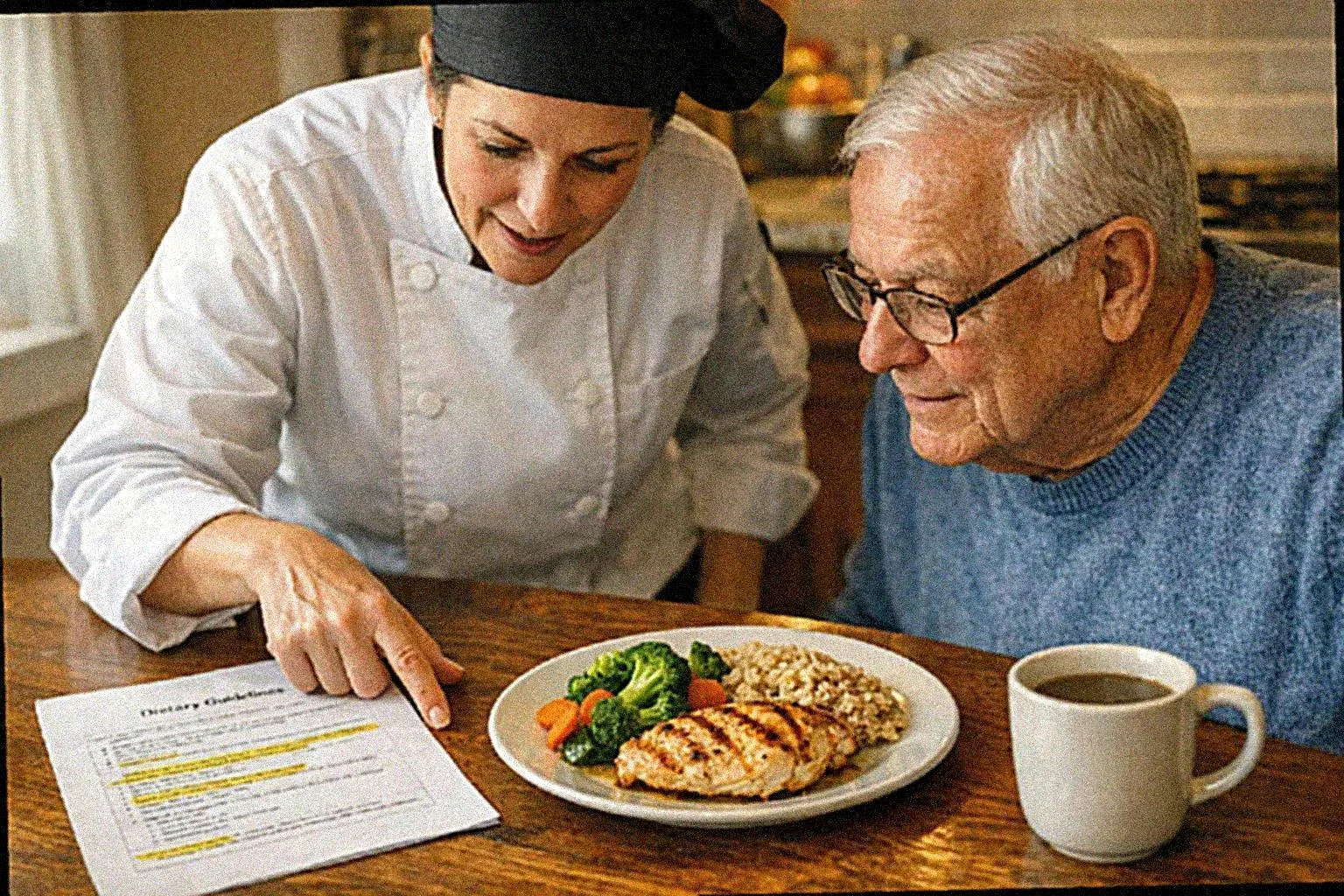
Well Prepped Life prepares and delivers diabetic-safe, pureed, renal, and soft-food meals for seniors and disabled adults across the San Francisco Bay Area — Justine Sanidad, ServSafe-certified chef based in Mountain View, executes medical diet plans in your parent's own kitchen every week. The discharge sheet says "low-sodium, heart-healthy, follow-up in two weeks." The senior reading it has just spent four days at El Camino, is on a new beta blocker and a new diuretic, and has roughly zero idea what 1,500 mg of sodium looks like on a plate. Medical diet planning is the bridge between that printout and dinner. The doctor sets the targets; the dietitian (if there is one) writes them down; my job is execution in the kitchen so the targets actually get hit at every meal, every week. I'm Justine Sanidad, ServSafe-certified, working out of Mountain View. I'm not a clinician — I'm the chef who reads the discharge sheet, talks to your dietitian when needed, and cooks accordingly.
From Discharge Sheet to Friday's Fridge
I work from the actual document. Stanford, UCSF, El Camino, Good Samaritan, Sequoia, Washington, Mills-Peninsula, Alta Bates Summit — every system uses slightly different language. "Cardiac diet," "DASH-style," "2g sodium," "renal-friendly," "low-K" — I translate these into grocery lists and cook plans. If the sheet is vague (it often is) I ask the family to ping the discharging service for a number. For diabetic clients I usually anchor at 45–60g carb per meal, the standard ADA frame, then defer to your dietitian's exact target. For renal, the math runs by lab values: potassium ceiling, phosphorus, protein adjustment based on whether you're pre-dialysis, on dialysis, or post-transplant. The kitchen-side execution looks like: boil-and-drain technique for high-potassium vegetables, dried scallop and Shaoxing wine carrying flavor instead of soy, half-portion whole sweet potato instead of mashed (lower glycemic load on the same plate).
A Recent Walnut Creek Case — New CHF Diagnosis
73-year-old retired teacher, just discharged from John Muir after a five-day admission with new heart failure (EF 35%). On furosemide, lisinopril, metoprolol. Cardiologist's order: under 2,000 mg sodium daily, fluid awareness (not strict restriction), continued blood pressure control. His wife had cooked their meals for forty-eight years and was suddenly told most of her recipes — Italian-American, sausage-and-pasta-heavy, parmesan on everything — were now out of bounds. Week one: I rebuilt five of her core recipes inside the sodium budget. The Sunday gravy reworked with no-salt-added crushed tomatoes, fresh basil and oregano carrying the seasoning, parmesan held to a measured tablespoon at the table. Chicken cacciatore with the canned olives swapped for fresh, capers limited. Polenta unchanged (it's already low-sodium). Salmon with lemon and dill twice a week. By week three he'd hit his sodium target every day. His wife felt like she'd kept her kitchen.
Diets I Cook For Regularly
Cardiac (DASH, AHA-style, 1,500–2,000 mg sodium). Diabetic (45–60g carb per meal frame, with adjustments per RD; emphasis on whole-food carbs, low-sodium proteins, plenty of non-starchy vegetables). Renal/CKD (potassium, phosphorus, protein adjusted by stage and lab values; boil-and-drain technique for high-K vegetables when needed). Dysphagia (IDDSI levels 4–6, soft-mechanical and minced-and-moist; I cook these to order, not from a freezer). Anti-inflammatory (post-surgical, autoimmune). Neutropenic (immunocompromised oncology — strict food-safety protocol, no soft cheeses, no unwashed raw produce). Combination diets (the diabetic + CKD case is the most common stack; cardiac + dysphagia second).
Where This Service Fits
Medical diet planning is bundled with the weekly cook tiers. A medically prescribed diet lands in the Coordinated tier at $200/week — 8 fresh meals, one weekly visit, active medical-diet management, a written weekly family report, and a caregiver text channel (Foundation at $180/week covers simpler, single-diet households). See [pricing](/pricing) for the full framework. If your situation is post-hospital specifically, the [post-hospital meal prep](/services/post-hospital-meal-prep) page covers the recovery-window setup — the Coordinated plan, or a focused 4-week recovery block for $700 (saves $100). If you have a medically prescribed diet but no acute event, the Coordinated tier with menu planning is usually the right starting point.
How to Start
Free consultation in your home. Bring the discharge sheet, the RD note, and any recent lab printout you're comfortable sharing. We'll talk through the targets and sketch the first week's menu. Call (415) 971-3464 or book at wellpreppedlife.com. Service area: Palo Alto, Los Altos, Atherton, Menlo Park, San Jose, Mountain View, San Francisco, Oakland, Walnut Creek, and the Peninsula and East Bay corridors.
Explore More
Related Services
Service Locations
What clients are saying
“Great- very adaptable!”
“Best food I've eaten in a long time, Justine really cares about catering to my family's needs”
Frequently Asked Questions
Medicare does not cover general in-home meal prep or personal chef services. Some Medicare Advantage plans cover short-term medically tailored meals after a hospital discharge. Most families spend less per month on Well Prepped Life than a single day in a skilled nursing facility.
Pricing depends on the service, schedule, and level of customization. Every client situation is different. Call (415) 971-3464 for a free 15-minute consultation — we'll give you direct pricing for your situation, no obligation.
We typically have availability within the week. Book a free 15-minute consultation and the first meal prep session is usually scheduled within 7–10 days.
Yes. Well Prepped Life carries full liability insurance and holds a current ServSafe Food Handler certification. Documentation is available on request.
The San Francisco Bay Area — Mountain View (home base), Palo Alto, Los Altos, Menlo Park, Atherton, Cupertino, Sunnyvale, Santa Clara, Saratoga, Los Gatos, Campbell, San Jose, Redwood City, San Mateo, Burlingame, Milpitas, San Francisco, Oakland, Berkeley, Fremont, Walnut Creek, and Marin County.
Ready to Get Started?
Book your free consultation today. We’ll learn about your needs and show you exactly how our hire a medical diet chef for bay area seniors — from $180/week service can help. Call us at (415) 971-3464 or schedule online.
Book a free call15 min · no card · no pressureLove your first week or we re-cook it free.
Or call us directly at (415) 971-3464