Kitchen Safety & Optimization for Seniors in the Bay Area
Assessment, reorganization, and adaptive setups that let seniors cook safely and age in place — without major renovation.
Book Your Free Kitchen Assessment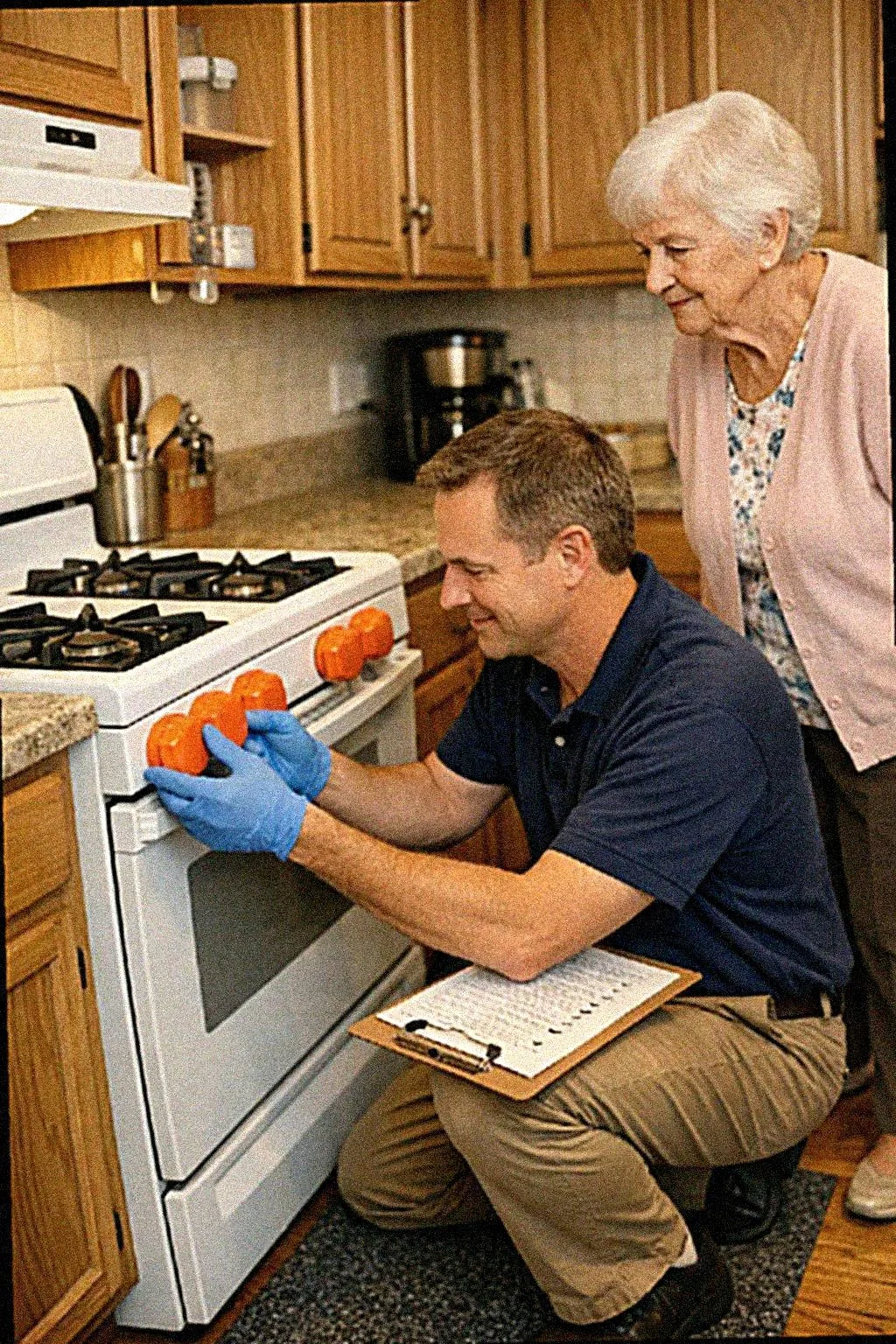
About Our Kitchen Safety & Optimization Services
A kitchen that was set up in a person's fifties may have become genuinely hazardous in their eighties. Spices stored on a high shelf require reaching overhead — a fall risk. Heavy cast iron pans stored in a low cabinet require bending and lifting — a back injury waiting to happen. Rugs in front of the sink absorb spills but curl at the edges. A disorganized pantry makes it impossible to track what's fresh and what's expired, leading to dietary accidents. None of these hazards require a contractor to fix. They require someone who understands both kitchen function and the physical realities of aging to come in, assess the space, and reorganize it.
Justine conducts in-home kitchen safety assessments that go beyond a generic checklist. She evaluates the current setup against the specific physical limitations and daily routines of the person using the kitchen. She identifies the highest-risk hazards first, recommends appliances that reduce strain and injury risk, organizes pantries and cabinets for both safety and ease of use, and advises on grocery shopping to prevent the buildup of expired and unsafe food. The goal is to extend independent, safe cooking for as long as possible — which is almost always longer than families assume, with the right modifications in place.
Kitchen Safety Services We Offer
2 kitchen safety and aging-in-place services across the SF Bay Area
Frequently Asked Questions
- How can I make my kitchen safer for an elderly parent?
- The most impactful changes are often the simplest: moving frequently used items from upper cabinets to lower shelves or counter level, removing rugs and clutter from floor traffic areas, ensuring adequate lighting over countertops and the stove, using non-slip mats under cutting boards, and switching to a kettle with an auto shut-off. Beyond these basics, a professional kitchen safety assessment identifies the specific hazards that are present in your parent's actual kitchen — which varies significantly based on the kitchen layout, your parent's physical limitations, and how they currently use the space. Justine conducts these assessments in-home and delivers actionable recommendations rather than a generic checklist.
- What kitchen modifications help seniors age in place?
- Aging-in-place kitchen modifications range from simple reorganization to structural changes. Without renovation, the most effective changes include: storing heavy items at waist height, installing pull-out shelves in lower cabinets, adding D-ring cabinet hardware for easier opening, switching to lever faucet handles, installing an induction cooktop (which eliminates open flame and stays cooler to the touch), and using a perching stool at counter height for seated meal prep. These changes can extend independent cooking by years. Justine evaluates the existing kitchen, identifies which modifications would have the highest impact, and helps implement organizational and equipment changes without requiring a contractor.
- What are the most common kitchen hazards for elderly people?
- The four highest-risk hazard categories in senior kitchens are: burns (from open flames, hot burners, and steam — compounded by reduced skin sensitivity and slower reflexes), falls (from reaching overhead, bending low, wet floors, or cluttered pathways), scalds from boiling water or hot liquids being moved, and medication or dietary errors from disorganized pantries and expired food. Cognitive decline adds a fifth category: forgotten stove burners and neglected food left out past safe temperatures. A kitchen safety assessment with Well Prepped Life addresses all five categories systematically.
- How do you organize a kitchen for someone with limited mobility?
- Kitchen organization for limited mobility follows one principle: reduce the distance and effort between the person and the things they use every day. This means the most-used items (plate, glass, everyday utensils, coffee supplies) belong at counter height or in the most accessible cabinet location — not wherever they happened to end up decades ago. A dedicated cart or rolling island can create a mobile workspace. Pantry items should be labeled at eye level with large, readable text. Leftovers and meal prep containers should be at the front of the refrigerator, not buried in the back. Justine conducts a full pantry and kitchen reorganization session that restructures the space around how the person actually moves through it.
Start with a Free Kitchen Safety Assessment
The free Kitchen & Nutrition Assessment includes a walkthrough of the current kitchen setup — hazards, organization, and aging-in-place opportunities. No commitment required. Call (415) 971-3464 or schedule online.
Book Your Free Kitchen AssessmentOr call us directly at (415) 971-3464