
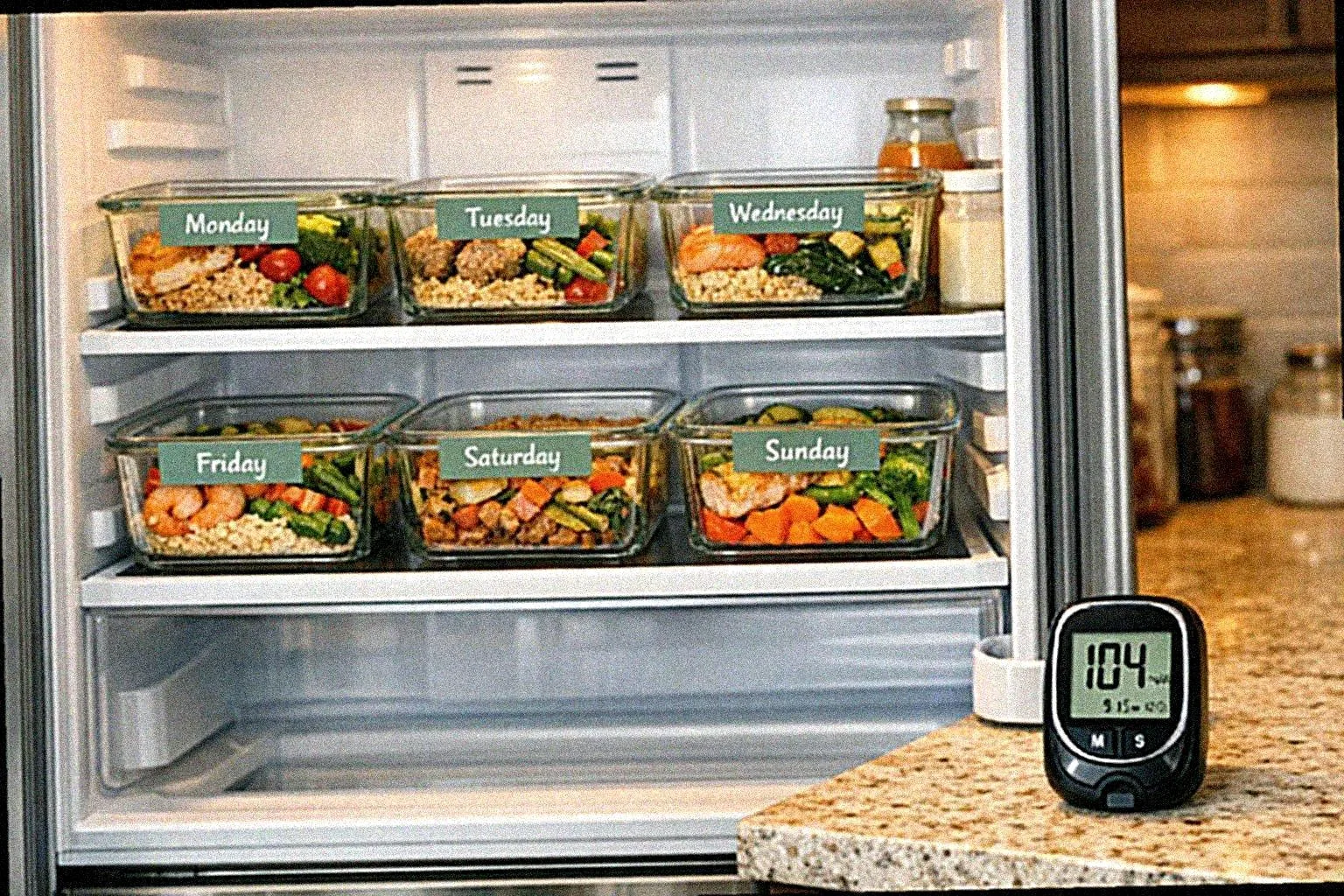
Diabetic meal prep for seniors is one of the highest-leverage things you can do for blood sugar control — and one of the most underused. I work with families across the Bay Area where managing type 2 diabetes through diet has become an exhausting daily negotiation: every meal requires thought about carbohydrate content, glycemic impact, portion size, and timing. Cooking starts to feel less like nourishment and more like a job.
Meal prep changes that equation. Spend a few focused hours one afternoon a week, and you — or the person you're caring for — can have a full week of blood-sugar-friendly meals ready to grab from the fridge. Less daily decision-making. Less temptation to reach for something convenient and regrettable. More consistent glucose control. The science on meal planning for type 2 diabetes is clear: when healthy food is already prepared and accessible, people eat it. When it requires effort, they don't.
Here's exactly how to do it in a way that's sustainable and actually tastes good — because food that doesn't taste good doesn't get eaten, and that defeats the whole point.
What You Need to Understand About Carbohydrates Before You Prep
You don't need a nutrition degree to build a solid diabetic meal prep system. But you do need to understand one thing: not all carbohydrates hit blood sugar the same way.
Foods high in fiber — vegetables, legumes, whole grains — digest slowly and cause a gentle, gradual rise in blood sugar. Refined carbohydrates — white bread, white rice, sugary drinks, processed snacks — spike blood sugar fast. For an older adult managing diabetes or prediabetes, that difference is everything.
The practical framework:
- Build meals around non-starchy vegetables. Leafy greens, broccoli, cauliflower, bell peppers, zucchini, green beans, asparagus — these have minimal blood sugar impact and can be eaten in generous portions. This is where most of the plate should come from.
- Include controlled portions of complex carbs. Brown rice, sweet potatoes, quinoa, lentils, and beans are all appropriate in the right amounts — typically ¼ of the plate at a meal.
- Minimize refined carbs in your prep. White bread, white rice, sugary sauces, and sweetened yogurts are the main things to swap out.
A simple diabetes-friendly plate target: 50% non-starchy vegetables, 25% lean protein, 25% complex carbohydrate. This structure naturally keeps carb load in the right range without needing to count grams at every meal.
Step 1: Batch-Cook Your Proteins for the Week
Protein first, always. Lean batch-cooked proteins are the backbone of this whole system — they stabilize blood sugar by slowing carbohydrate absorption, keep you full longer, and don't impact glucose at all. Pick 2–3 proteins for the week and cook them all on prep day.
Best proteins for diabetes-friendly senior meal prep:
- Baked chicken thighs or breast (thighs are more forgiving to reheat — breast dries out)
- Baked salmon or tilapia fillets
- Hard-boiled eggs — cook 10–12 at a time, peel immediately
- Ground turkey browned with onion, garlic, and no-salt-added tomato
- Canned tuna or salmon — zero prep required, 20–25g protein per serving
- Cooked lentils or black beans — excellent plant-based protein and fiber
Batch chicken thighs: Season 6–8 bone-in thighs with olive oil, garlic, dried herbs, and black pepper. Roast at 400°F for 35–40 minutes until internal temp is 165°F. Pull from bone, shred or cube, store in an airtight container. Stays good for 4–5 days. Freezes well.
Batch salmon: Line a sheet pan with foil. Season fillets with olive oil, lemon, dill, and a pinch of salt. Bake at 425°F for 12–14 minutes. Portion into individual servings — stores 3–4 days, high in omega-3s which support insulin sensitivity in addition to everything else.
Step 2: Prep a Large Volume of Non-Starchy Vegetables
This is where diabetic meal prep pays off the most. When non-starchy vegetables are already washed, cut, and ready to go, they become the default option — and for diabetes management, that's exactly what you want.
What to prep:
- A full head of broccoli cut into florets. Roast half at 400°F for 20 minutes with olive oil and garlic; keep the rest raw for quick salads.
- Sliced bell peppers (red, yellow, orange). Keep some raw for snacking, sauté the rest with onion. Bell peppers also have more vitamin C than citrus — useful for seniors on iron supplements.
- A large container of washed mixed greens or spinach — instant salad base, no additional prep.
- A sheet pan of zucchini and cherry tomatoes roasted together at 425°F for 15 minutes.
- Green beans, steamed or roasted.
Storage that actually works: Roasted vegetables reheat in 60–90 seconds in the microwave. Raw prepped vegetables keep best in containers lined with a paper towel to absorb moisture — this extends freshness by a day or two.
Step 3: Cook One or Two Complex Carbohydrate Bases
A moderate portion of complex carbohydrate at each meal helps prevent blood sugar crashes and keeps energy stable between meals — the goal isn't zero carbs, it's controlled, high-fiber carbs. Prep one or two of these:
Quinoa: 2 cups dry makes about 6 cups cooked. 15-minute cook time. Stores 5–6 days. About 8g protein per cup cooked — it's one of the few grains that contributes meaningfully to protein goals.
Brown rice: 2 cups dry makes about 5 cups cooked. 45 minutes (use a rice cooker if you have one — set it and forget it). Stores 5 days. Lower glycemic index than white rice, significantly more fiber.
Sweet potato: Bake 4–6 whole at 400°F for 45–60 minutes. No prep — just wash and poke holes. Stores 5 days in the fridge. Reheats in 2 minutes. High in fiber, potassium, and vitamin C, and has a moderate glycemic index when eaten whole (lower than mashed).
Lentils: 1.5 cups dry makes about 4 cups cooked. 25–30 minutes. One of the lowest glycemic carbohydrate sources available — excellent in soups, salads, or as a side. Also contributes 9g protein per half cup cooked.
Step 4: Portion Into Individual Containers
This is the step most people skip, and it's the step that determines whether the prep actually gets used. Keep proteins and carbs in bulk, and watch half of it go bad before it's finished. Portion into individual servings, and the week runs on autopilot.
A sample diabetes-friendly portioned lunch container:
- 4 oz baked chicken or salmon
- 1 cup roasted broccoli and bell peppers
- ½ cup cooked quinoa
- Small container of olive oil and lemon dressing on the side
A sample portioned dinner container:
- 4 oz ground turkey
- ¾ cup roasted zucchini and cherry tomatoes
- ½ cup cooked sweet potato
Label with the day if you're organized, or simply count out 5 lunches and 5 dinners and know they're ready. For seniors managing multiple conditions alongside diabetes, this same portioning approach works for low-sodium meal planning and post-surgery recovery — the system is the same, the building blocks change.
Step 5: Storage, Safety, and Staying on Schedule
- Cooked proteins: 4–5 days in the refrigerator at 40°F or below. Freeze half if prepping for a full 7 days — move from freezer to fridge on day 3 or 4.
- Cooked grains: 5–6 days.
- Roasted vegetables: 3–4 days at best quality; they're still safe at 5 days but texture declines.
- Label everything with the prep date using masking tape and a marker. Don't trust your memory on this.
- Keep the fridge at or below 40°F — check with a fridge thermometer if you haven't recently. Many household fridges drift warmer than their setting.
A Sample Week of Meals From One Prep Session
Monday–Wednesday lunches: Grilled chicken thigh, roasted broccoli and bell peppers, ½ cup quinoa, lemon-herb dressing
Monday–Wednesday dinners: Baked salmon, sautéed bell peppers and zucchini, ½ baked sweet potato
Thursday–Friday lunches: Ground turkey over brown rice with roasted cherry tomatoes and green beans
Thursday–Friday dinners: Lentil soup (made in 30 minutes on Thursday — here's the base recipe) with a large green salad
That's 10 complete, blood-sugar-stable meals from one afternoon of prep. The variety is real, the effort per meal is near zero, and the glucose management is built into the structure.
A Note on Carbohydrate Targets and Individual Needs
Standard guidance for type 2 diabetes is 45–60g of carbohydrate per meal for most adults — but individual targets vary significantly based on medications, activity level, insulin use, and specific diabetes type. The portioning in this system is designed to fall within that general range, but always follow guidance from your healthcare team or registered dietitian for specific targets. What I do is handle the kitchen side — the planning, shopping, cooking, and setup — so the medical guidance your team gives actually gets executed at every meal.
If your parent is managing diabetes alongside heart disease or hypertension, combining this system with low-sodium meal prep strategies is the move — the flavor techniques there make eating well sustainable, not punishing.
If you'd like help setting up a diabetes-friendly meal prep system in your Bay Area home — either for yourself or a parent you're caring for — book a free Kitchen Assessment. I'll walk through your specific situation, the dietary requirements, and what a sustainable weekly system looks like for your kitchen.
Frequently Asked Questions
What are the best meals to batch cook for a diabetic senior?
The best batch-cooked meals for diabetic seniors are built on lean proteins, non-starchy vegetables, and controlled portions of high-fiber complex carbohydrates. Specifically: baked chicken thighs or salmon (portioned into 4-oz servings), roasted broccoli and bell peppers, quinoa or lentils (½ cup per meal), and sweet potato (½ medium potato per serving). These combinations stay under 45–60g carbohydrate per meal while delivering high protein and fiber — the two factors most responsible for stable blood sugar after eating.
How much carbohydrate should a diabetic senior eat per meal?
The standard recommendation is 45–60g of carbohydrate per meal for most adults with type 2 diabetes, but individual needs vary. Factors that affect the target include medications, activity level, weight, and whether insulin is involved. In practical terms, a plate built from ¼ complex carbohydrate (½ cup cooked grain or one small sweet potato), ¼ lean protein, and ½ non-starchy vegetables will typically fall in the right range for most people. Always confirm specific targets with your healthcare team or a registered dietitian.
What foods should diabetic seniors avoid in meal prep?
Avoid building meal prep around refined carbohydrates — white rice, white bread, sugary sauces, sweetened yogurts, and processed snack foods. These cause rapid blood sugar spikes. Also watch for hidden sugar in condiments, salad dressings, and canned goods. When reading labels, look for total carbohydrate content and fiber — the net carbs (total carbs minus fiber) are what actually impact blood sugar. Swap white rice for brown rice or quinoa, white bread for whole grain, and regular yogurt for unsweetened Greek yogurt.
Can a diabetic senior eat sweet potatoes?
Yes — sweet potatoes are appropriate for diabetic seniors in controlled portions. A medium sweet potato has about 23g of carbohydrate and 4g of fiber. When eaten whole (rather than mashed, which increases the glycemic response), they have a moderate glycemic index and are rich in fiber, potassium, and vitamin C. A half sweet potato as part of a balanced meal — alongside protein and non-starchy vegetables — fits comfortably within a 45–60g carbohydrate target. They're one of the most nutrient-dense complex carbohydrate options in the prep rotation.
How do I manage meal prep when my parent has both diabetes and low appetite?
Prioritize calorie density within the blood-sugar-stable framework. Full-fat Greek yogurt (higher calories and protein than low-fat), salmon (calorie-dense and high-protein), avocado, and olive oil all add calories without spiking blood sugar. Make portions slightly smaller but more frequent — 5–6 small meals rather than 3 large ones — to get total intake up during windows when appetite is present. Pre-portion everything so eating doesn't require effort. If low appetite is consistent and affecting weight, talk to their doctor — it may be a medication side effect with adjustable options.
Looking for help with meal prep tips? Learn about our Weekly Meal Prep service →
We'll walk through your specific kitchen situation together — no pressure, no commitment.
Book Your Free Kitchen Assessment