Batch cooking for caregivers isn't a trend — it's the system that keeps you in the game. I work with families across the Bay Area who are driving to their parents' houses three, four times a week to cook dinner, and I see the same thing every time: it's not sustainable. Not at that pace. The food piece of caregiving is relentless — it happens multiple times a day, every single day — and if you're building from scratch every time, you're going to burn out before your parent's situation gets any easier.
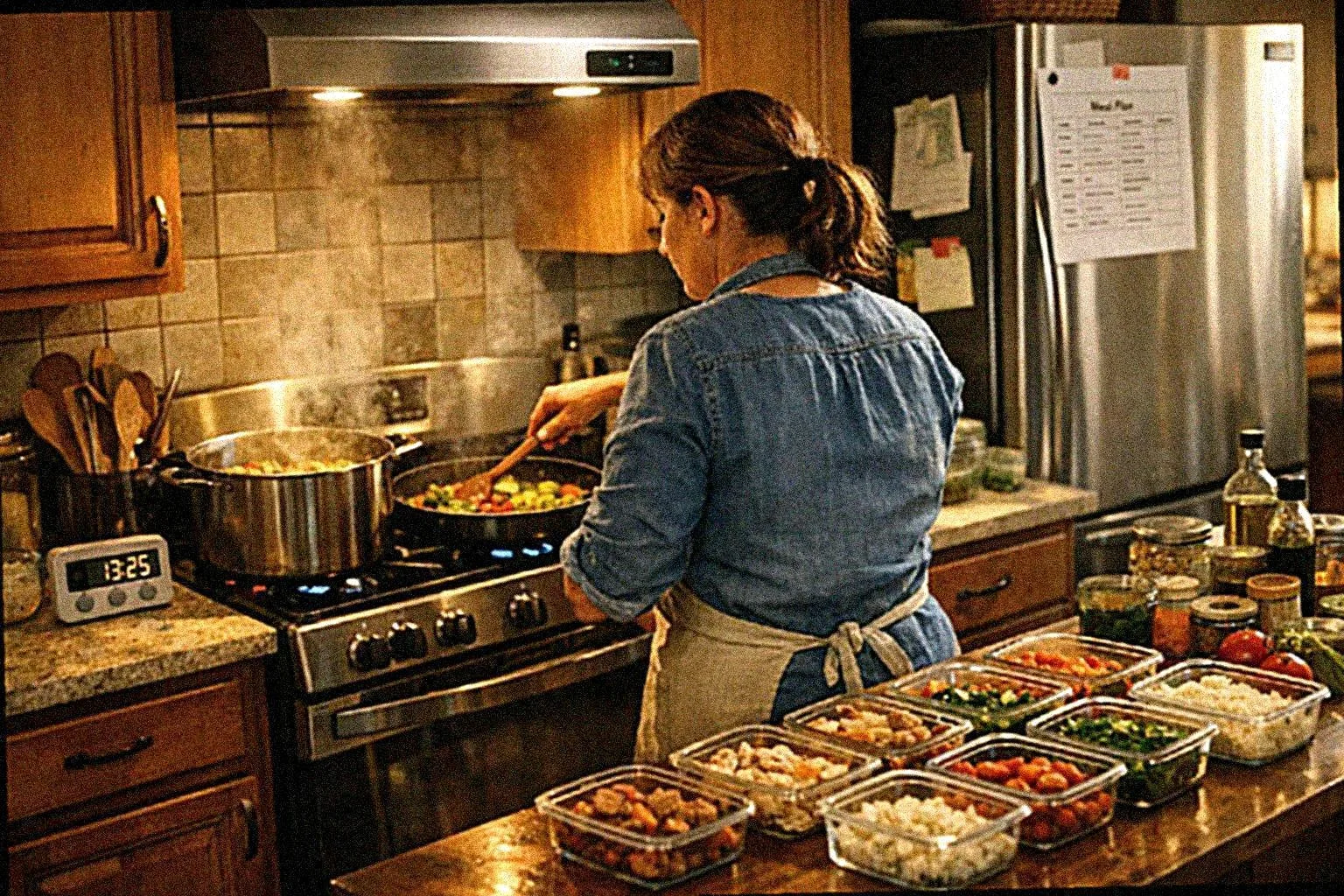
One focused cooking session, 2–3 hours, once or twice a week. That's the whole system. You walk away with enough ready-to-eat or easy-to-reheat food to cover most meals for 3–5 days. The goal isn't perfection. The goal is having something good in the fridge so that mealtime doesn't require starting over from scratch every single time.
This is basically prep day for your parent's week — and for your sanity.
What Does Batch Cooking Actually Look Like for Caregivers?
Forget the Pinterest version with 30 matching containers lined up in a color-coordinated fridge. Real caregiver batch cooking is messier. It has to account for someone else's restrictions, preferences, texture needs, and the fact that appetite varies day to day. It has to be simple enough that you can actually maintain it when you're already stretched thin.
The most important reframe: you're not cooking 21 individual meals. You're preparing building blocks — proteins, cooked grains, roasted vegetables, and one ready-to-eat soup — that combine in different ways throughout the week. This creates variety without requiring separate prep for each meal. It adapts to low-appetite days. The components are easy for a caregiver or neighbor to assemble. And everything reheats in a microwave in under two minutes.
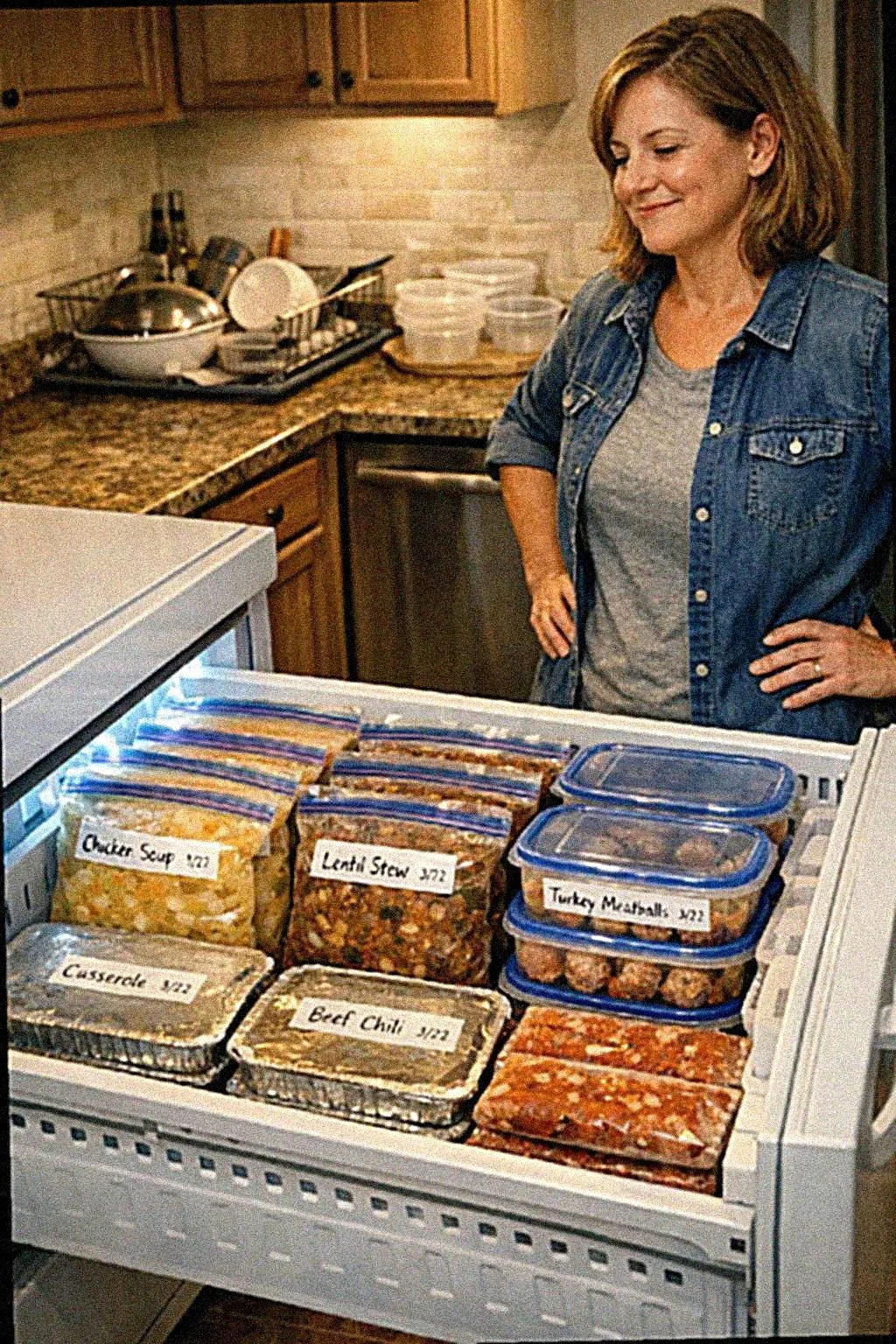
If you're doing this alongside your own household's meal prep, check out how to build a freezer meal plan in one weekend — same philosophy, longer shelf life.
Step 1: Proteins — 30 to 40 Minutes of Active Prep
Protein first, always. Choose two proteins for the week and cook them in bulk.
Batch-cooked chicken thighs are the workhorse of elder care meal prep. Thighs stay moist when reheated — chicken breast dries out and becomes hard to chew, which is a real issue for older adults. Thighs shred easily, go with nearly everything, and hold well for 4–5 days.
- Season 6–8 bone-in thighs with olive oil, garlic, salt, pepper, and dried herbs
- Roast at 400°F for 35–40 minutes until internal temp hits 165°F
- Pull meat from the bone, shred or cut into soft pieces, store in an airtight container
- Good for 4–5 days in the fridge; freeze any extra
Hard-boiled eggs require almost no active effort and cover both protein and quick snack needs.
- Cook 8–10 at once. Peel them all immediately — much easier in bulk when they're still warm
- Store in a container in the fridge for up to a week
- Mash into egg salad, slice onto toast, eat whole as a snack — 6g protein each, basically free labor
Other solid batch proteins: ground turkey (brown a pound with onion and freeze half for the following week), canned salmon or sardines (zero cooking required — 20–25g protein per can), lentils (1.5 cups dry yields 4 cups cooked, great for soups or grain bowls).
Step 2: A Grain or Starch — 15 to 45 Minutes, Mostly Hands-Off
Pick one: quinoa, brown rice, or sweet potatoes. I'm not overthinking it.
Quinoa is the fastest and most nutritionally dense option. 2 cups dry makes 6 cups cooked. Rinse it, simmer 15 minutes, fluff, done. Stores 5–6 days. Easy to eat warm or cold, mixes well with vegetables, and has more protein than most grains — about 8g per cup cooked.
Sweet potatoes are probably the single most valuable item you can have in the fridge for an aging parent. They're nutrient-dense, naturally sweet (which appeals to decreased appetites), easy to mash if needed, and loaded with fiber, potassium, and vitamin C. Bake 4–6 whole at 400°F for 45–60 minutes — no prep, just wash and poke holes. They reheat in 2 minutes and pair with everything.
Step 3: Roasted Vegetables — 20 Minutes of Prep, 25 Minutes in the Oven
Roasted vegetables are the most versatile building block in this whole system. They reheat without getting soggy, taste good at room temperature, and hold for 4–5 days.
A standard batch: one sheet pan of broccoli and bell peppers, one sheet pan of zucchini and cherry tomatoes. 425°F, 20–25 minutes. Season with olive oil, garlic, and pepper — nothing complicated. This covers most of the vegetable needs for the week. Total active time: 20 minutes, and you don't have to watch it.
The reason roasting matters more than steaming: roasted vegetables hold their texture when you refrigerate and reheat them. Steamed vegetables turn watery and mushy by day two, which does nothing for someone who's already dealing with a decreased appetite.
Step 4: One Ready-to-Eat Soup — 30 to 45 Minutes
I'm not gonna lie — if I had to pick one single thing that makes the biggest difference in elder care food management, it's having a pot of soup in the fridge. It covers lunch and dinner options, reheats in a minute, doesn't require any assembly, and is consistently one of the most comforting foods for older adults. On days when appetite is low, soup goes down when nothing else will.
Keep one soup in the rotation. It doesn't need to be different every week. If your parent loves lentil soup, make lentil soup every week. Familiar food is almost always more welcome than creative food when you're dealing with a reduced appetite or cognitive changes.
Minimum-effort lentil soup:
- 1 cup red lentils + 4 cups low-sodium chicken or vegetable broth
- 1 can diced tomatoes (no salt added)
- 1 diced onion, 2 garlic cloves, 1 tsp cumin, 1 tsp turmeric, black pepper
- Sauté onion and garlic 5 minutes. Add everything else. Simmer 25 minutes.
- Blend partially for a creamier texture. Portion into individual containers.
- Makes 5–6 servings. Freezes perfectly.
For families dealing with additional conditions, this same soup base works as a starting point for diabetic-friendly meal prep — just watch the portion size of the lentils and pair with non-starchy vegetables.
What This Week Looks Like With Zero Additional Cooking
With those four building blocks ready, here's how the week assembles:
Breakfasts (no additional prep): scrambled eggs in 2 minutes, oatmeal, Greek yogurt, toast with a pre-mashed hard-boiled egg.
Lunches: soup plus a grain bowl, or shredded chicken in a tortilla, or a hard-boiled egg plate with roasted vegetables and sweet potato.
Dinners: shredded chicken + roasted vegetables + quinoa. Or lentil soup with sweet potato on the side. Or a quick piece of salmon (15 minutes) alongside the already-prepped vegetables.
Snacks: hard-boiled eggs, fruit, nuts, yogurt — all zero prep.
That's 3–5 days of solid, nutritious food from one cooking session. The protein targets are met. The vegetables are there. The comfort food is covered.
The Container Setup That Makes or Breaks the System
Prep without the right containers creates its own friction. You don't need anything fancy, but you need:
- Individual serving-size containers — not just bulk storage. Portion during prep so it's grab-and-heat during the week
- Microwave-safe lids — your parent or their caregiver should be able to reheat without transferring to another dish
- Clear containers — seniors with reduced appetite are more likely to eat something they can actually see. Out of sight genuinely means out of mouth
- Labels with reheat instructions — masking tape and a Sharpie is enough. "1.5 min microwave, stir once" on the container means anyone can handle it
This matters more than people expect. I've seen well-prepped fridges fail because nobody could figure out what was in the opaque containers or how long to heat anything.
When Batch Cooking Isn't Enough
Batch cooking solves the daily friction. It doesn't solve everything.
When your parent lives 45+ minutes away. A weekly trip to cook is still a real time commitment. It's worth actually calculating what your time and gas cost, and whether an in-home service covering 2–3 visits per week would be less expensive — not to mention less exhausting.
When dietary needs stack. Managing a parent with diabetes plus kidney disease plus low appetite plus swallowing difficulties is beyond what a batch-cooking routine can fully address on its own. If swallowing is a concern, there's overlap with what I cover in meal prep after stroke recovery. If the combination of conditions feels unmanageable, that's when working with someone who understands therapeutic nutrition makes a real difference.
When you're the only one doing it. Burnout isn't just hours — it's feeling alone in the responsibility. If you have siblings, this is the conversation to have about dividing tasks. If you don't, even one professional visit per week changes how this feels. You deserve support too.
And if kitchen safety is becoming a concern while you're not there — whether it's the stove, the reach, the memory — it's worth reading through kitchen safety tips for elderly parents living alone before the next incident happens.
If you're a family caregiver in the Bay Area and the food piece is overwhelming — or if you just want someone to come in and set up a system you can actually maintain — book a free Kitchen Assessment. I work with adult children caring for aging parents every day, and I'm here to make this more manageable.
Frequently Asked Questions
How many hours does a caregiver batch cooking session actually take?
Most caregivers can cover 3–5 days of an aging parent's meals in 2–3 hours of active cooking. The key is working in parallel: roast chicken and vegetables at the same time, cook grains while the soup simmers. You're not waiting on each step — everything runs concurrently. If you're new to it, the first session takes closer to 3 hours; by week three, most people are down to 90 minutes.
What are the best foods to batch cook for an elderly parent?
The four building blocks that give you the most coverage per hour of effort: bone-in chicken thighs (moist when reheated, shreds easily), roasted vegetables (hold texture for 4–5 days), a simple grain like quinoa (15-minute cook time, stores 5–6 days), and a pot of soup. These cover the full meal structure — protein, produce, starch, comfort food — without requiring separate prep for each meal.
How long does batch-cooked food stay safe in the fridge?
Cooked proteins stay safe for 4–5 days at 40°F or below. Cooked grains last 5–6 days. Roasted vegetables are best within 4 days. Soups and stews refrigerate for 4–5 days and freeze for up to 3 months. If you're prepping for a full 7 days, freeze half of the proteins after portioning and move them to the fridge on day 3 or 4.
How do I handle batch cooking when my parent has multiple dietary restrictions?
Start with the restrictions that have the most consequences — sodium limits, diabetes management, swallowing difficulties — and build the system around those first. Most building-block proteins and vegetables are naturally low-sodium and lower-glycemic, so the base system adapts well. For swallowing concerns, the same proteins can be prepared softer (braised rather than roasted) or shredded finer. If the combination of conditions is complex, a professional assessment is worth it.
When should I consider hiring a meal prep service instead of doing it myself?
When the time cost plus the emotional cost exceeds what you can reasonably sustain. Specifically: if your parent lives more than 30 minutes away, if dietary needs are medically complex, if you have your own family and job competing for the same hours, or if the stress of the food piece is affecting your health. When to hire a meal prep service for an aging parent covers this in more detail — but the short version is that using professional support isn't giving up. It's a smart use of resources.
Looking for help with caregiver resources? Learn about our Caregiver Meal Support service →
We'll walk through your specific kitchen situation together — no pressure, no commitment.
Book Your Free Kitchen Assessment