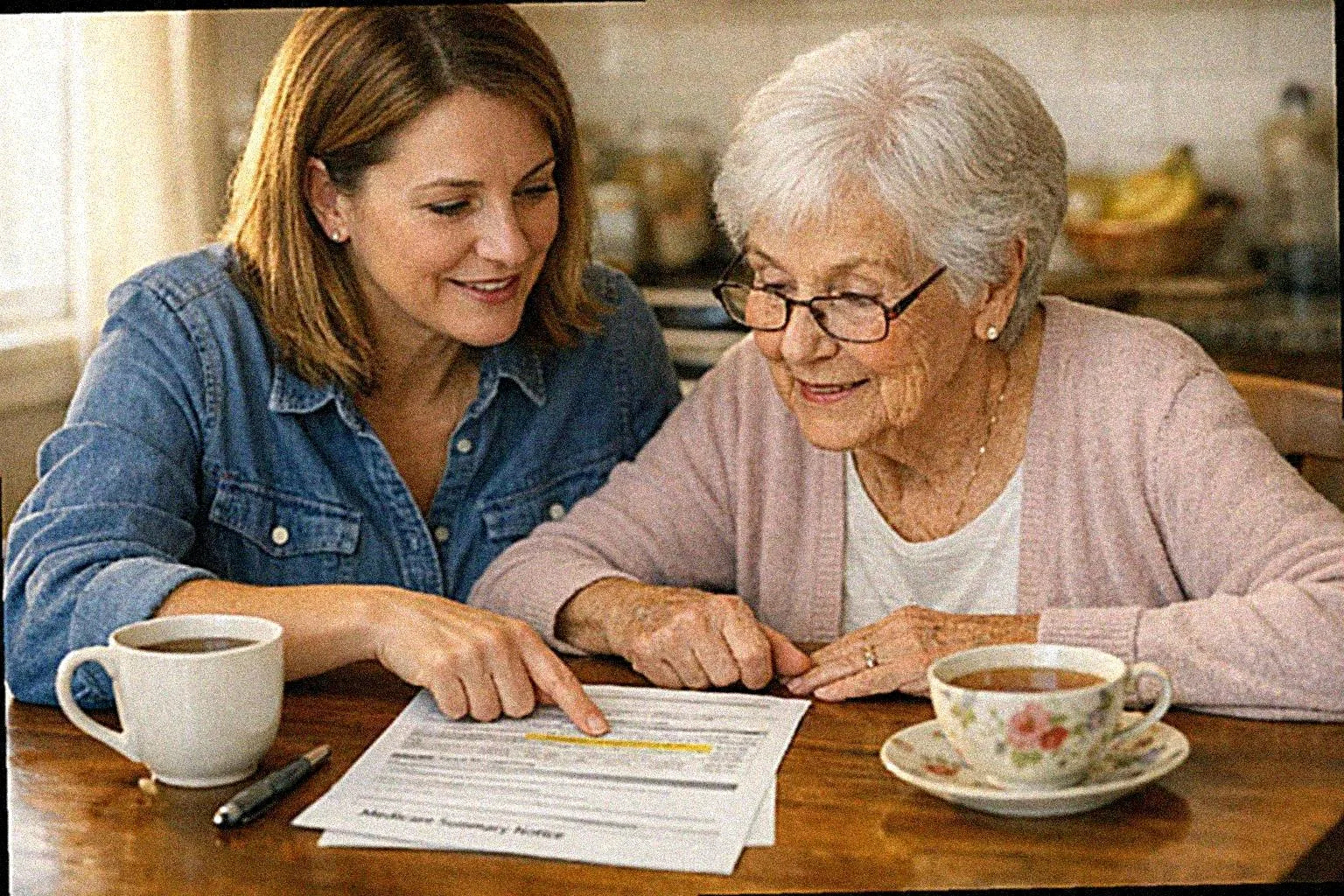
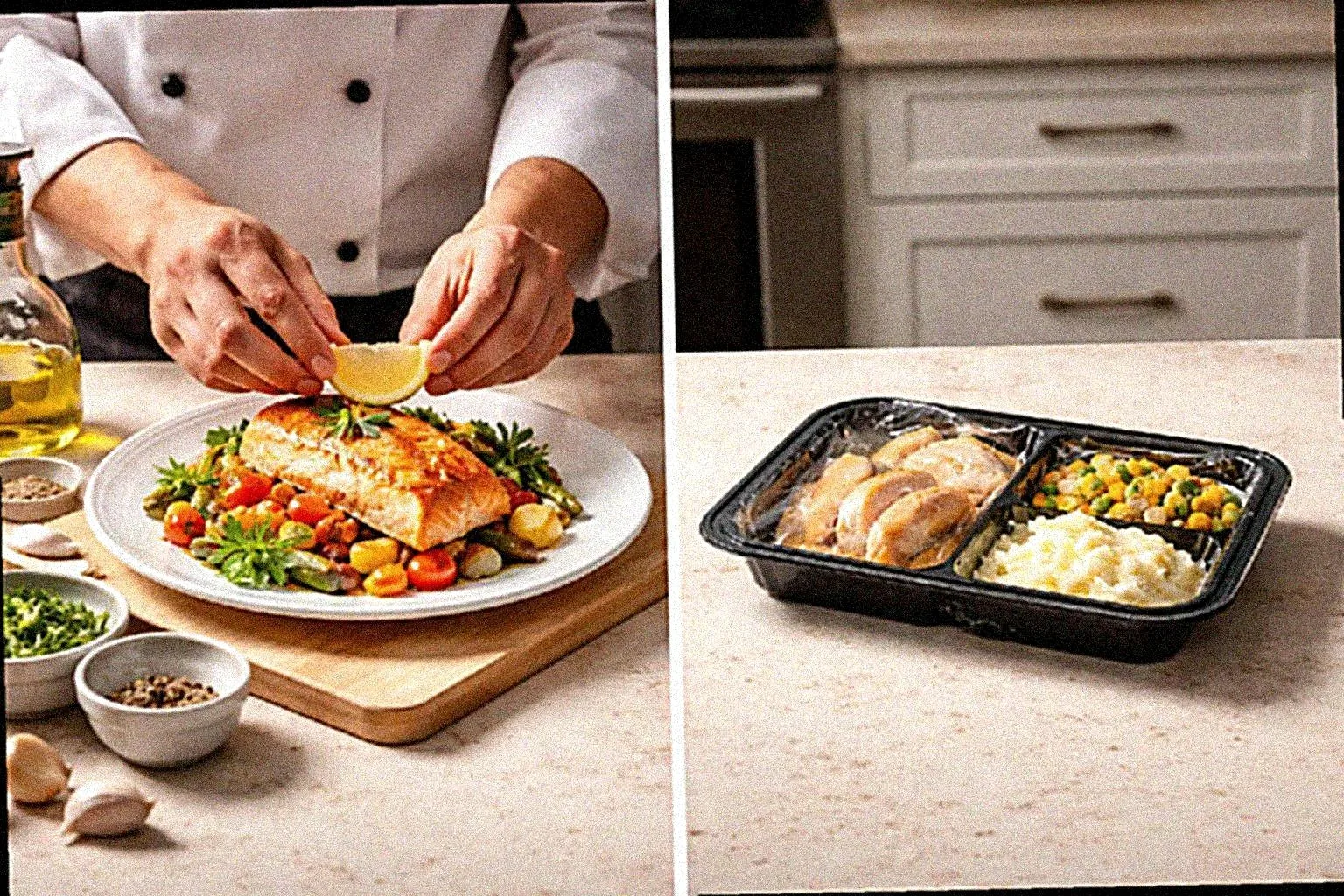
When families start exploring meal support for an aging parent, two options frequently come up: hiring a home care aide who includes meal preparation in their duties, or hiring a personal chef service that focuses specifically on food. On the surface, both involve someone coming to the home and making meals. In practice, they're very different services solving different problems, and understanding the distinction matters before you commit time and money to either one.
I run Well Prepped Life, an in-home meal prep service for seniors and disabled adults in the Bay Area. I work alongside home care aides regularly — many of my clients have both a personal chef (me) and a home care aide. This isn't a competitive comparison where I trash one option to sell the other. Both services have legitimate, important roles. The question is which one — or which combination — actually solves your parent's specific problem.
What a Home Care Aide Does
Home care aides (also called home health aides, personal care assistants, or caregivers) provide a broad range of in-home support. Depending on the agency and the care plan, a home care aide's responsibilities typically include:
- Personal care: Bathing, dressing, grooming, toileting assistance
- Mobility assistance: Help with transfers, walking, fall prevention
- Medication reminders: Ensuring medications are taken on schedule
- Light housekeeping: Laundry, tidying, dishes, taking out trash
- Companionship: Conversation, activities, accompaniment to appointments
- Meal preparation: Cooking simple meals and snacks during their shift
Meal preparation is one item on a long list of responsibilities. For most home care aides, cooking is a small fraction of their shift — maybe 30–60 minutes out of a 4–8 hour visit. The rest of the time is spent on the other tasks above, which are the primary reason the aide is there.
Home care aides in the Bay Area are typically hired through agencies (Home Instead, Visiting Angels, Right at Home, and local agencies) or independently. Agency rates run $30–$45+ per hour. Independent aides may charge less but come without agency oversight, backup coverage, or liability insurance.
What a Personal Chef Service Does
A personal chef service for seniors is entirely focused on food. When I come to a client's home, the entire visit is dedicated to:
- Menu planning based on dietary needs, medical requirements, and personal preferences
- Grocery shopping for fresh, quality ingredients
- Cooking multiple meals in the client's kitchen (typically 8–15 individually portioned meals per session)
- Portioning and labeling each meal for easy identification and access
- Proper storage in the refrigerator, organized so the client or their caregiver can easily find and reheat meals
- Full kitchen cleanup — the kitchen is spotless when I leave
That's it. I don't do laundry, I don't help with bathing, I don't provide medication reminders. Food is the job, and it gets my complete attention for the entire session.
The Core Difference: Specialization vs. Generalization
This is the fundamental distinction, and it drives everything else.
A home care aide is a generalist. They're trained to provide competent support across a wide range of daily living tasks. Cooking is one of those tasks, and they can do it — but it's rarely their area of expertise, and the time allocated to it during a shift is limited.
A personal chef is a specialist. The entire service exists around food — planning it, sourcing it, preparing it well, and making sure it meets specific nutritional and dietary requirements. The depth of knowledge about nutrition, cooking technique, ingredient selection, dietary modification, and food safety is fundamentally different.
This isn't a criticism of home care aides. It's the same distinction between a general practitioner and a cardiologist. Both are real doctors. But if you have a complex heart condition, you want the cardiologist for that specific thing, even if you also see the GP for everything else.
What Home Care Aide Cooking Typically Looks Like
I want to be honest about this without being dismissive, because I see home care aide cooking regularly in my clients' homes.
The training reality: Most home care agencies provide minimal cooking training. Aides learn basic food safety, simple meal preparation, and how to follow a client's instructions. They're not trained in nutrition, dietary modification for medical conditions, cooking technique, or menu planning.
What typically gets made: Sandwiches, scrambled eggs, canned soup, pasta with jarred sauce, reheated leftovers, microwaved frozen meals. These are not bad foods — they're perfectly fine. But if your parent needs a low-sodium diet, this kind of cooking rarely accounts for the sodium content of canned soup or jarred pasta sauce. If your parent has texture requirements (mechanical soft, pureed), most aides don't have the skills to produce meals that meet those requirements while still tasting good.
Time pressure: An aide cooking during a 4-hour shift has maybe 30–45 minutes for meal prep after handling personal care, medications, housekeeping, and companionship. That's enough time to make one simple meal — not to plan, shop for, and prepare several days' worth of nutritionally balanced, individually portioned meals.
Ingredient limitations: Aides cook with whatever is in the kitchen. If the fridge is sparse — which is common in homes where the senior can no longer shop independently — the aide is working with limited options. Some agencies have aides do basic grocery runs, but this takes time away from other care tasks and the shopping is typically limited to a quick trip for basics.
Consistency: With agency staffing, the same aide isn't always available. When aides rotate, cooking preferences, dietary requirements, and kitchen familiarity reset each time. A new aide doesn't know that your parent can't eat certain textures, prefers their vegetables cooked a specific way, or has a soy allergy that wasn't clearly documented.
What Personal Chef Cooking Looks Like
When I do a meal prep session, the entire 4–5 hours is cooking:
Menu planning happens before the visit. I've already planned 8–12 meals based on the client's dietary restrictions, nutritional targets, cultural preferences, and what they enjoyed (or didn't) from previous sessions. The menu is intentional, varied, and specific to that person.
Grocery shopping is done with expertise. I know which produce is best this week, which proteins are high quality, and where to source specialty ingredients for specific cultural cuisines or dietary needs. Shopping is deliberate, not a quick run for whatever's available.
Cooking is the entire visit. Multiple dishes are prepared simultaneously. A typical session might produce a chicken and vegetable soup (low-sodium, from scratch), a fish dish with grain and roasted vegetables, a braised meat that's tender enough for someone with dental issues, a vegetable-heavy stir fry adapted for a diabetic diet, and two or three additional meals — all portioned into individual containers, labeled, and stored in the fridge.
Dietary modifications are precise. If the doctor says under 1,500mg sodium per day, I'm tracking that across every meal. If the client needs mechanical soft texture, every component is prepared to the right consistency. If they're managing diabetes, the carbohydrate content of each meal is considered in the planning. This isn't guesswork — it's the core competency.
The food tastes good. I want to be clear about why this matters: seniors who don't enjoy their food eat less of it. Malnutrition in older adults is rarely about food access alone — it's often about food quality. When every meal is bland, institutional-tasting, or texturally unappealing, people stop eating enough. Good food isn't a luxury. For seniors at risk of malnutrition, it's a health intervention.
When a Home Care Aide Is the Right Choice for Meals
A home care aide's meal preparation is appropriate and often sufficient when:
- Your parent's dietary needs are simple. If they're generally healthy, can eat most foods, and are happy with straightforward meals, an aide's cooking is fine.
- Your parent needs comprehensive daily care. If the primary needs are personal care, mobility assistance, medication management, and companionship — and meals are a secondary concern — a home care aide handles all of it in one visit.
- Budget is the primary constraint. If the family can afford either a home care aide or a personal chef but not both, and the parent needs help with daily living tasks beyond meals, the aide addresses more needs.
- The parent is very particular and will direct the cooking. Some seniors are happy to sit in the kitchen and tell the aide exactly what to do. If the parent is essentially the menu planner and cooking instructor, the aide becomes an extra pair of hands — and that works.
When a Personal Chef Service Is the Right Choice
A personal chef service becomes the better option when:
- Dietary needs are medically complex. Renal diets, cardiac diets, diabetic meal plans, texture-modified diets, multiple simultaneous restrictions — these require specific knowledge that most home care aides don't have.
- The parent has lost weight or is at nutritional risk. If malnutrition or unintentional weight loss is already happening, food quality and nutritional precision become urgent. A personal chef addresses this directly.
- Cultural food preferences matter. If your parent wants food from their cultural background — Filipino, Chinese, Mexican, Indian, Japanese, any specific cuisine — a personal chef who can cook that cuisine authentically makes the difference between food that gets eaten and food that sits in the fridge.
- Food quality is a priority. If your parent cares about how their food tastes — and most people do, even when they stop saying so — a personal chef delivers a categorically different eating experience.
- The parent is otherwise independent. If your parent doesn't need help with bathing, dressing, or mobility — if the only real gap is meals — a personal chef addresses the actual problem without paying for services that aren't needed.
When You Need Both
Many of my clients have both a home care aide and a personal chef service, and the combination is often the best solution for seniors with significant needs. Here's how it typically works:
The personal chef (me) comes once a week. I plan, shop, cook, portion, label, and store a full week of meals. The fridge is stocked with high-quality, dietary-appropriate meals ready to reheat.
The home care aide comes daily or several times a week. The aide handles personal care, medication reminders, companionship, light housekeeping — and reheats the meals I've prepared. Reheating a labeled, portioned meal takes 3–5 minutes in the microwave. The aide doesn't need cooking skills because the cooking is already done.
This division of labor plays to each service's strengths. The aide does what aides do best — broad daily support. The chef does what chefs do best — high-quality food. The client gets excellent care and excellent food, and neither provider is stretched into doing something outside their expertise.
For the aide, this setup is actually a relief. Most home care aides I've talked to are candid: cooking is the part of the job they feel least confident about. When the meals are already prepped and they just need to reheat, plate, and serve, that stress is gone. They can focus on the caregiving work they were trained for and are good at.
Side-by-Side Comparison
| Personal Chef (Well Prepped Life) | Home Care Aide (agency) | |
|---|---|---|
| Primary purpose | Food: planning, shopping, cooking, portioning | Personal care: bathing, mobility, meds, companionship |
| Cooking training | Career chef; medical-diet literate (renal, diabetic, dysphagia, low-sodium, cultural cuisines) | 0–4 hours of basic food-safety training in most agencies |
| Time on meals per visit | 100% of the visit (3–5 hrs) | 30–60 min out of a 4–8 hr shift |
| Meals produced per visit | 8–14 individually portioned, labeled meals | 1–2 simple meals (and reheats) |
| Menu planning | Done before the visit, tailored to specific medical + cultural needs | Decided that day from what's in the fridge |
| Grocery shopping | Included; deliberate sourcing for produce + specialty items | Sometimes a quick run; whatever's in the kitchen |
| Kitchen cleanup | Full reset — counters, dishes, stove, trash | Limited; dishes are part of the broader housekeeping list |
| Same person each visit | Yes (founder-led) | No — agency rotation is the norm |
| Cost (Bay Area) | $349–$849/wk + groceries (see pricing) | $30–$45/hr — typically $2,400–$3,500+/wk for full coverage |
| Best when | Food quality, medical-diet precision, malnutrition risk, cultural preferences | Bathing, transfers, medication oversight, companionship |
What Each Costs in Practice
Home care aide (agency): $30–$45/hour, typically 4–8 hours per visit. If the aide comes 5 days a week for 4 hours, that's $600–$900/week, or $2,400–$3,600/month. Visiting Angels and similar full-service agencies often quote closer to $3,500/week for more comprehensive coverage. Meals are a small part of what you're paying for.
Personal chef (Well Prepped Life weekly): $349/wk Foundation, $549/wk Standard, $849/wk Comprehensive — plus groceries at cost. That's roughly $1,400–$3,400/month, all of it for food and the in-home relationship that comes with it. See our pricing page for what's in each tier.
Both together: Adding a personal chef on top of an aide costs $349–$849/wk more, but it pulls cooking off the aide's plate (a task most aides are candid about not feeling confident with) and dramatically improves food quality. The aide reheats labeled meals from the fridge in 3–5 minutes and spends the saved time on the personal-care work they were actually trained for.
For a deeper look at personal chef pricing, see how much does a personal chef for seniors cost.
Questions to Ask When Deciding
These are the questions I'd ask if I were in your position:
What's actually going wrong with meals right now? Is it that no one is cooking? That the food being cooked isn't nutritionally adequate? That your parent won't eat what's being prepared? The answer determines which service addresses the root problem.
What are your parent's dietary needs? If they're medically complex, a personal chef is likely necessary. If they're straightforward, an aide may be sufficient.
Does your parent need daily in-home support for non-food tasks? If yes, a home care aide is probably already needed, and the question becomes whether to supplement with a personal chef for food quality.
Has your parent lost weight or started skipping meals? If yes, this is a nutrition emergency, not a cooking convenience issue. A food-focused intervention — not just adding cooking to an aide's task list — is the appropriate response.
What does your parent actually want to eat? This question gets skipped too often. If your parent has strong food preferences and the current cooking doesn't meet them, they'll eat less regardless of who's doing the cooking.
Making It Work
The families who are happiest with their parent's meal situation are usually the ones who got clear about what the actual problem was before choosing a solution. "My parent needs help with meals" can mean five different things, and the right service depends on which one you're dealing with.
If you want to talk through your parent's specific situation — what's working, what isn't, and whether a personal chef service adds value to their current care setup — I'm happy to have that conversation honestly. Sometimes the answer is that what they have is fine and they just need a few adjustments. Sometimes the answer is that a weekly meal prep session would change everything.
Call (415) 971-3464 or book a free Kitchen Assessment to start the conversation. I serve seniors and disabled adults across the San Francisco Bay Area. Our someone to cook for elderly guide is the plain-language entry point, and our personal chef for elderly parents guide is written for adult children evaluating this exact decision.
Frequently Asked Questions
Can a home care aide cook specialized diets for seniors?
Most home care aides can follow basic dietary guidelines (low-sodium, diabetic-friendly) at a general level, but they typically lack the training to precisely manage complex dietary requirements like renal diets, specific calorie and macronutrient targets, texture-modified diets, or multiple simultaneous restrictions. If your parent's dietary needs are medically complex, a personal chef with nutrition expertise is better equipped to ensure meals consistently meet those requirements.
Is it worth hiring both a home care aide and a personal chef?
For seniors with significant daily care needs and complex dietary requirements, the combination is often the most effective approach. The personal chef handles all meal planning, shopping, cooking, and portioning during a weekly session. The home care aide handles daily personal care, companionship, and simply reheats the pre-prepared meals. Each provider focuses on their area of expertise, and the senior gets excellent care and excellent food.
How do I know if my parent needs a personal chef instead of just a caregiver who cooks?
Key indicators include: unintentional weight loss, complex dietary restrictions that aren't being consistently met, food that's being prepared but not eaten (suggesting quality or preference issues), cultural food preferences that the current caregiver can't accommodate, and nutritional decline despite having "meal help" in place. If the problem is specifically about food quality and dietary precision rather than general daily care, a personal chef addresses the root issue.
Looking for help with senior care? Learn about our Personal Chef for Seniors service →
We'll walk through your specific kitchen situation together — no pressure, no commitment.
Book Your Free Kitchen Assessment