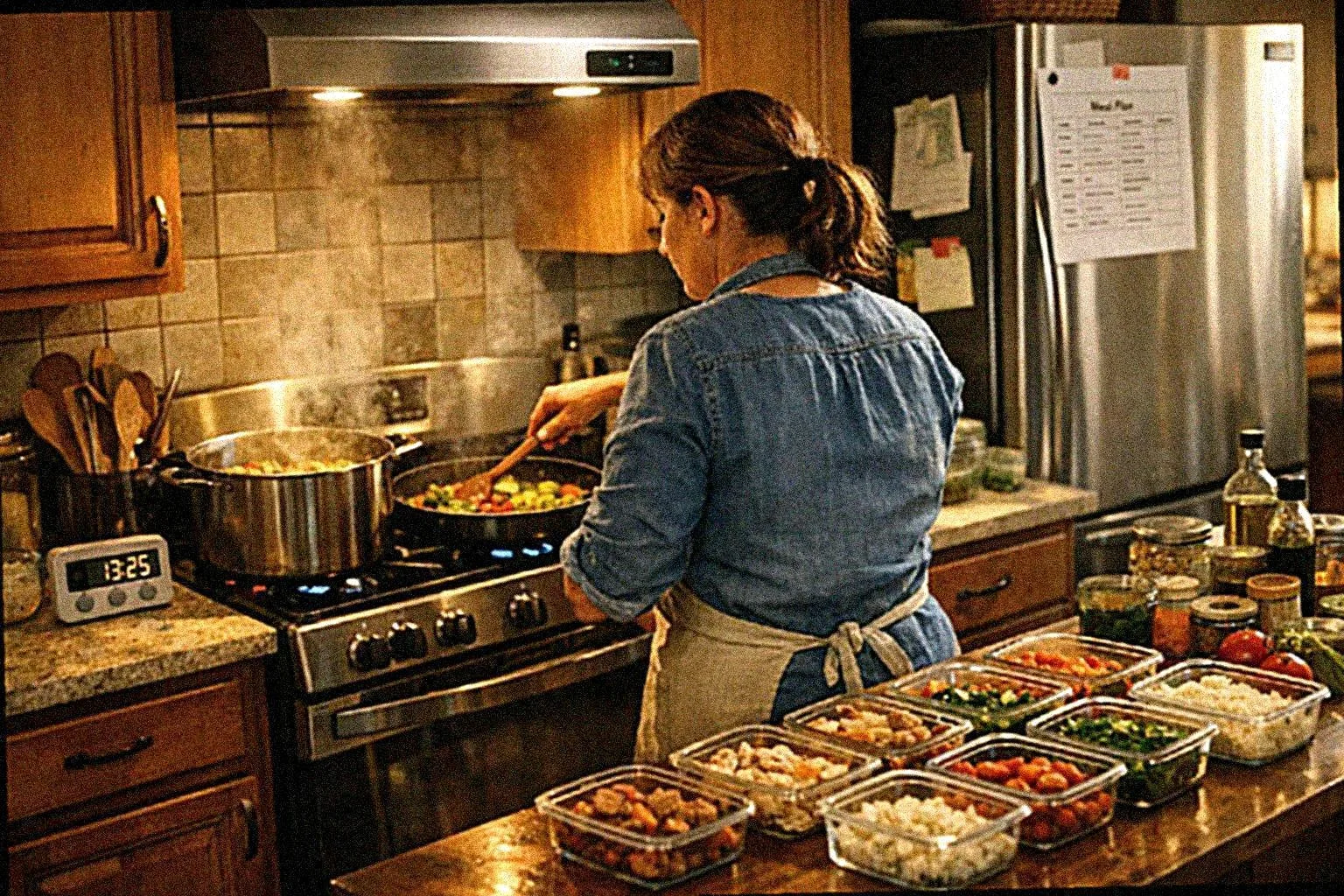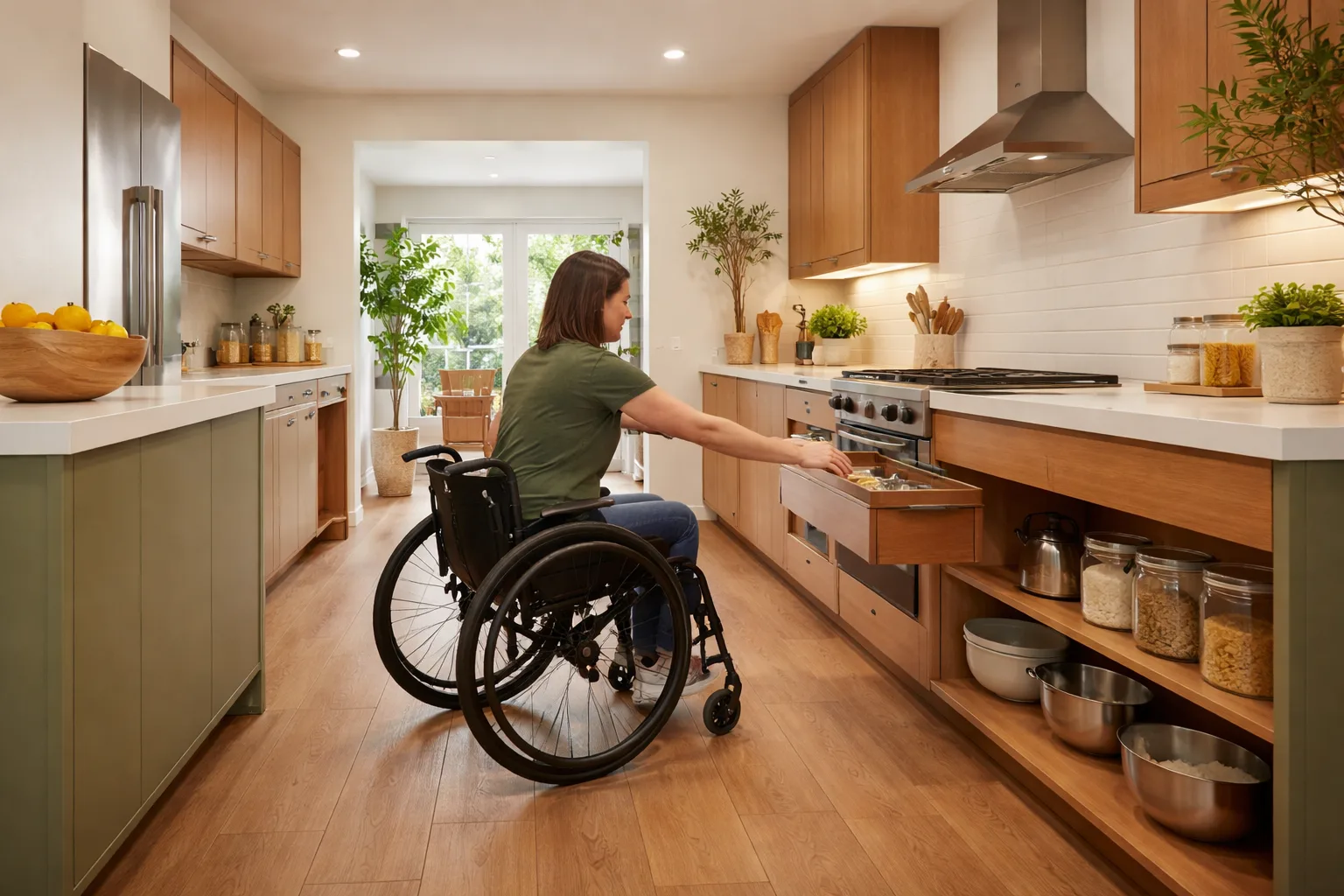
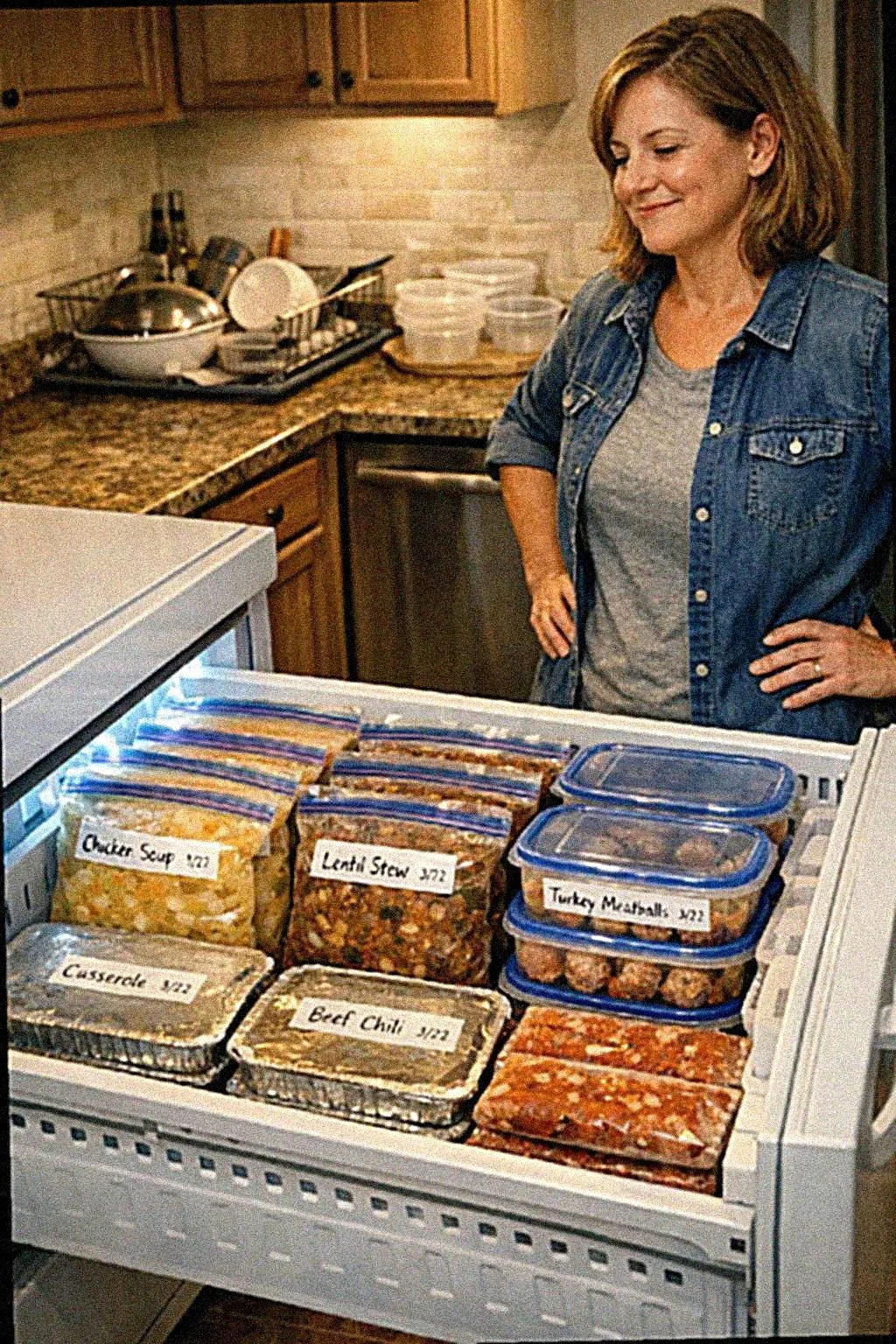
A caregiver freezer meal plan sounds intense. It's actually one of the most liberating things you can do for yourself — and for your parent.
Here's how I think about it: batch cooking covers a week. You spend one afternoon, you make four building blocks, and you're covered through Thursday. That's the baseline. The freezer plan is the backup layer underneath it — what's there when the week goes sideways. When you're sick, when there's a work emergency, when your own family needs you and you literally cannot drive across town to cook.
When there's a well-stocked freezer, your parent eats well no matter what. That peace of mind is genuinely different from week-to-week batch cooking. I've had clients tell me that building the freezer was the moment caretaking stopped feeling like a crisis management job.
Here's how to do it: one focused weekend, eight core items, a month of backup coverage. For the broader system this slots into, see our freezer meal prep for seniors guide.
What Freezes Well for Elderly Adults (And What Doesn't)
Not everything survives the freezer well enough to be worth your time. Here's the real breakdown:
Freezes excellently:
- Soups and stews (every variety — this is the MVP category)
- Braised and shredded meats (chicken thighs, turkey breast, pulled pork)
- Cooked lentils and beans
- Cooked grains (quinoa, brown rice, farro)
- Mashed sweet potato and mashed regular potato
- Baked goods (banana oat muffins, protein muffins)
- Smoothie packs (pre-portioned frozen fruit + greens, ready to blend)
Freezes acceptably with minor texture changes:
- Roasted vegetables (slightly softer after freezing — actually fine for seniors who need softer textures)
- Egg-based dishes (scrambled eggs get slightly spongy — workable, not ideal)
- Pasta dishes (cook pasta slightly under-done before freezing)
Don't bother freezing:
- Fresh salads and raw vegetables
- Cream-based sauces (separate and get grainy)
- Fried foods (lose all crispness)
- Whole boiled potatoes (waterlogged disaster)
For elder care meal prep you'll be working almost entirely in the "freezes excellently" category. This is actually easy territory.
The 8-Item Freezer Arsenal
These are the eight things I recommend every caregiver keep in the freezer at all times. Together they cover breakfasts, lunches, dinners, snacks, and emergency situations.
1. Chicken Soup (The MVP)
The single most valuable freezer item for elder care. Warm, nourishing, easy to eat, appealing on low-appetite days, and infinitely adaptable. Make a very large pot — 12–16 servings — and freeze in individual portions.
For dementia care, a smooth blended chicken soup requires no chewing and can be sipped from a cup. For post-surgery recovery, it's the perfect soft protein vehicle. For someone who "just isn't hungry," the smell of warm soup often succeeds where nothing else does.
Make it simple: a whole chicken or 4–5 pounds of bone-in chicken thighs, low-sodium broth, carrots, celery, onion, garlic, soft noodles or soft rice. Shred all the chicken. Freeze in labeled portions.
2. Lentil or Bean Soup
High in protein, high in fiber, budget-friendly, and one of the most nutritionally complete single foods for elderly adults. Red lentil soup, white bean and kale soup, black bean soup — all freeze perfectly, all reheat in two minutes.
For diabetic-friendly prep, lentils and legumes have a very low glycemic index — they don't spike blood sugar the way other carbohydrates do. More on this in our medical diet planning service. For a heart-healthy post-stroke recovery diet, they're ideal.
3. Shredded Chicken or Turkey
Cook 4–6 pounds of bone-in chicken thighs or a whole turkey breast at once. 400°F, 35–40 minutes. Shred all of it while it's still warm. Divide into 2-cup portions and freeze flat in bags.
This is the most versatile building block in elder care cooking. It goes into soup, onto grain bowls, into soft tacos, alongside roasted vegetables, or just as a simple protein portion. Thighs stay moist when reheated (breast dries out — always use thighs for batch cooking).
4. Mashed Sweet Potato
Bake 6–8 sweet potatoes (400°F, 50–60 minutes), mash with a little butter and minimal salt, portion into individual containers, freeze. This is one of the most nutritionally dense freezer items you can make: vitamin A, potassium, vitamin C, fiber. Naturally sweet, appealing on low-appetite days, and works for almost every dietary restriction including post-hospital meal recovery and soft-texture requirements.
5. Cooked Quinoa or Brown Rice
Cook 4–6 cups dry. Let cool completely spread flat on a sheet pan before freezing (prevents clumping into a solid brick). Portion into 1-cup bags. Reheat with a tablespoon of water in a covered microwave-safe container, 2 minutes. Ready-to-eat grain turns any protein into a complete meal in minutes.
6. Banana Oat Muffins
This one surprises people, but it's hella useful. Baked goods are among the most practical freezer items for elderly adults with low appetite. A muffin is small, non-threatening, calorie-dense, and can be eaten at any time of day without needing to sit down for a full meal.
Banana oat muffins made with whole oats, ripe banana, egg, a little olive oil, and a pinch of cinnamon are nutritionally solid and freeze beautifully. Defrost overnight or microwave from frozen in 45 seconds. For someone with dementia, a muffin on the counter is often accepted where a plated meal is ignored. For anyone with low appetite, it's an easy way to get real calories in.
Make 12–18 at once. They last 3 months in the freezer.
7. Low-Sodium Pasta Sauce or Tomato Base
A good batch of homemade low-sodium tomato sauce in the freezer means pasta, polenta, or grain bowls are always 15 minutes away. Olive oil, canned crushed tomatoes, garlic, onion, fresh herbs, black pepper — no added salt. Cook down 30–40 minutes, freeze in 1-cup portions.
For the full picture on cooking without added salt while keeping real flavor, our medical diet planning service covers this and the harder cases — renal, cardiac, dysphagia.
8. Smoothie Packs
Pre-portion into sandwich bags: 1 cup frozen berries, 1 handful frozen spinach, half a frozen banana. Freeze flat. When needed, blend one pack with 1 cup full-fat Greek yogurt and a splash of milk. That's 25–30g of protein, significant antioxidants, and 350–400 calories in under two minutes.
This is the nutritional emergency tool. When your parent hasn't eaten well, when appetite is very low, when solid food isn't working — a smoothie often succeeds. For post-surgery recovery, it's a lifeline. For post-stroke clients on texture-modified diets, it can be adjusted to appropriate consistency.
The Two-Day Weekend Plan
This is how to build the full freezer arsenal in one weekend. Total active time: 4–6 hours spread across Saturday and Sunday.
Saturday: The Heavy Lifting (3–4 hours active)
Morning:
Start sweet potatoes first — they take the longest. Wash and poke holes in 6–8 sweet potatoes, put them in the oven at 400°F, set a timer for 55 minutes, and forget about them.
While sweet potatoes bake, start your chicken soup. Get a large pot going with your chicken, broth, aromatics, and vegetables. This simmers for 90 minutes mostly unattended — you'll mostly be doing other things while it goes.
Midday:
Mix and bake your banana oat muffins (30 min active + 20 min bake time). While muffins bake, start your lentil soup in a second pot — red lentil soup takes 25 minutes, basically no supervision needed.
Afternoon:
Put your chicken thighs in the oven for the shredded chicken batch (35–40 min). While they cook, get 4 cups of quinoa going on the stovetop (15 min once it comes to a boil).
Mash and portion the sweet potatoes. Pull the chicken, shred everything while it's still warm. Cool the quinoa spread on a sheet pan.
Start portioning and labeling. Begin freezing in stages.
Sunday: Finishing Touches (1–2 hours)
Make the tomato sauce (30–40 min, mostly hands-off). While it simmers, assemble all your smoothie packs.
Finish portioning and labeling anything not finished Saturday. Do a final freezer inventory. Add a laminated cheat sheet to the freezer door: what's inside, reheat instructions, date made.
End of weekend you have:
- 12–16 portions of chicken soup
- 8–10 portions of lentil soup
- 8–10 portions shredded chicken
- 6–8 portions mashed sweet potato
- 6 portions cooked quinoa
- 12–18 muffins
- 8–10 smoothie packs
- 6 portions tomato sauce
That's approximately 3–4 weeks of backup coverage.
The Labeling System That Makes It Actually Work
Freezer prep fails without clear labels. I've seen too many mystery containers that nobody eats because nobody knows what's in them.
Label every single item with:
- What it is
- Date made
- Reheat instructions (specifically: "Microwave 2 min, stir, 1 more min" or "Stovetop over medium, 5 min")
Use masking tape and a Sharpie on bags. Use the lid of containers. Put a laminated cheat sheet on the freezer door that any helper, neighbor, or sibling can follow without calling you.
Rotation rule: When you add new items, push older items to the front. Nothing sits untouched for months.
How the Freezer and Weekly Batch Cooking Work Together
The freezer isn't a replacement for weekly batch cooking — it's the safety net under it.
On a good week, you do a small fresh prep session (1–2 hours) for vegetables, a new protein, and one soup. Freezer items stay in reserve.
On a hard week — when you're sick, traveling, dealing with your own family — you pull from the freezer. No cooking. No guilt. Your parent still eats well.
Replenish the freezer once a month or whenever reserves get low. A Sunday afternoon every 3–4 weeks keeps the system running without becoming a second job.
If you'd like help setting up a freezer meal system — or if you'd like someone to come in and cook several weeks' worth of your parent's meals in one visit — book a free Kitchen Assessment. This is one of the services families across the Bay Area find the most relief from, and building that initial freezer stash together is some of the most satisfying work I do.
Frequently Asked Questions
How long do frozen meals last for elderly adults?
Most frozen soups, cooked proteins, and grain dishes maintain quality for 2–3 months in a standard home freezer. Baked goods like muffins are good for 3 months. Smoothie packs are best within 2–3 months. Label everything with the freeze date and aim to rotate through within 2 months for best quality.
What freezer containers work best for elderly adults to use?
Individual-portion rigid containers with wide mouths and microwave-safe lids are ideal — they go from freezer to microwave without transferring. Alternatively, freeze flat in quart-size zip-lock freezer bags (easier to stack and store), then transfer to a microwave-safe bowl for reheating. Write reheat instructions on every container or bag.
Can I do the weekend prep alone or do I need help?
The plan above is designed to be done by one person, with the staggered timing allowing multiple things to cook simultaneously. That said, having a second set of hands for the portioning and labeling stage is genuinely helpful. If a sibling is visiting, this is a great use of their time.
What if my parent has multiple dietary restrictions?
Build the freezer around their specific restrictions — low-sodium soups, diabetic-friendly grains, texture-modified proteins. The recipes in this guide are already low in added sodium and have good nutritional profiles for most common conditions. For complex combinations of restrictions, an in-home meal prep professional can build the freezer stash to exact medical requirements.
How do I get my parent to actually use the freezer meals?
The key is making it genuinely easy — pre-portioned, labeled with exact reheat instructions, visible at eye level in the freezer. On your visits, walk through the freezer together so they know what's there. Some families also set a gentle daily routine: "pick something from the freezer for lunch." Familiarity reduces the barrier to use.
Looking for help with caregiver resources? Learn about our Caregiver Meal Support service →
We'll walk through your specific kitchen situation together — no pressure, no commitment.
Book Your Free Kitchen Assessment