Meal prep for dementia caregivers is a completely different challenge than meal prep for anyone else. I've worked with families across the Bay Area where the person they're caring for used to cook elaborate Sunday dinners — and now refuses to sit at the table. Spouses trying to get real food into someone they love who picks at a plate, forgets mid-meal that they're eating, or seems genuinely confused by a fork.
You are not doing anything wrong. Dementia changes how the brain processes hunger, recognizes food, and coordinates the mechanics of eating. What worked six months ago may not work today. And what works today may need to change again next month.
This guide is for caregivers in the thick of it — what to prep, how to present it, and how to make this sustainable for you too. Because the second part matters. You can't keep someone else nourished if you're running on empty.
How Well Prepped Life Handles Dementia Meal Prep
If you're in the Bay Area and want professional support, here's exactly how I approach it:
Step 1 — Learn the person, not just the diagnosis. Before I cook a single thing, I learn what your loved one ate throughout their life. Comfort foods, cultural dishes, flavor preferences. These long-term food memories are often intact even when short-term memory is gone. I build the menu around them.
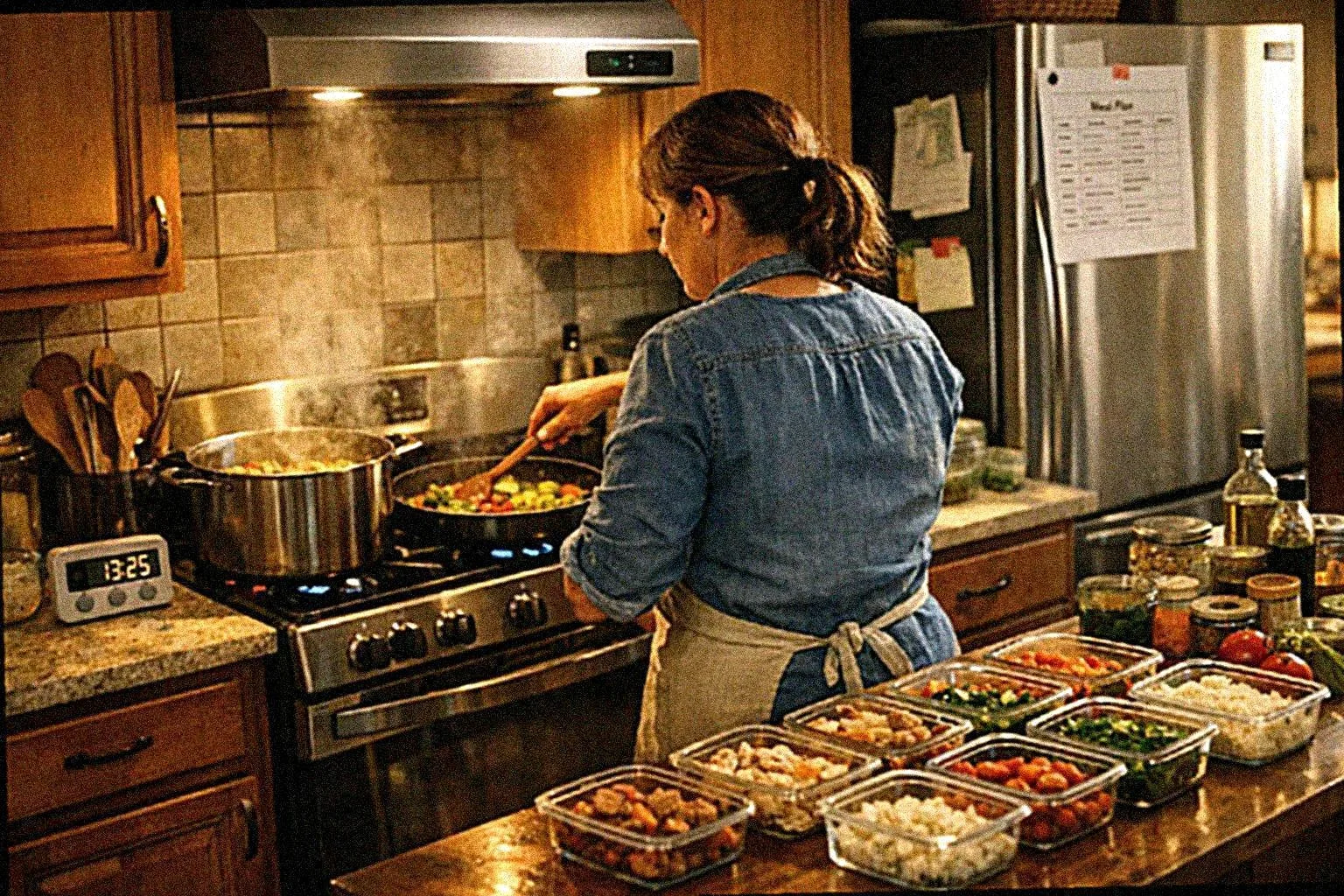
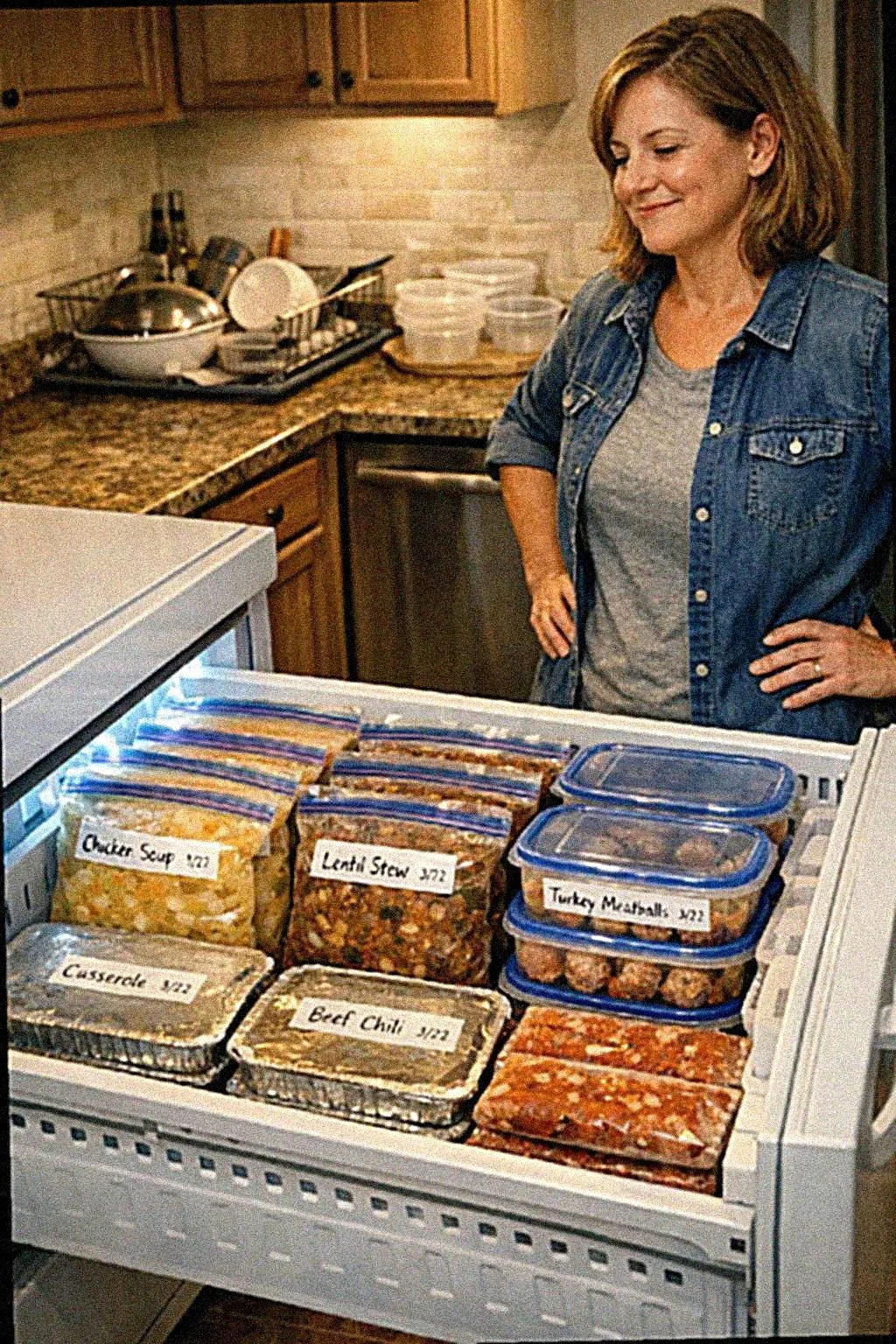
Step 2 — Prep for the week in one session. I come to the home, bring the groceries, and spend 2–3 hours preparing a full week of dementia-appropriate food: soft proteins, finger foods, individual freezer portions of familiar soups and casseroles. Everything is labeled with contents and reheating instructions so any caregiver can serve it without guesswork.
Step 3 — Adapt as things change. Dementia progresses. What works today may not work in three months. I check in regularly, adjust textures, and modify the approach as your loved one's needs evolve — including if we need to transition to fully pureed IDDSI-compliant meals.
If this is what you need, call (415) 971-3464 or book a free 15-minute call. I'm available this week.
Why Dementia Makes Feeding Someone So Hard
Before I get into what to prep, it helps to understand what's actually happening — because it explains why the standard approaches fail:
Hunger cues become unreliable. The brain's signals for hunger and fullness get disrupted. Your loved one may not feel hungry even after not eating for hours, or may sincerely not remember finishing a full meal 20 minutes ago.
Food recognition can fade. A casserole in a baking dish may not register as food. Colorful, distinct items — a bright strawberry, a piece of toast, a banana slice — are much easier to identify and respond to.
Chewing and coordination get harder as the disease progresses. Foods that require complex chewing or multi-step utensil use become difficult, frustrating, or unsafe.
Familiar foods stay accessible longer. Long-term food memories often persist well into moderate dementia. The soup your father ate every winter, the scrambled eggs your mother made on weekends — these can reach someone when unfamiliar food can't. The smell alone sometimes triggers appetite where nothing else will.
Calorie density matters more. Appetite typically decreases in moderate to advanced dementia, which means every bite needs to count more than it used to.
What to Prep: Dementia-Friendly Foods That Work
Finger Foods First
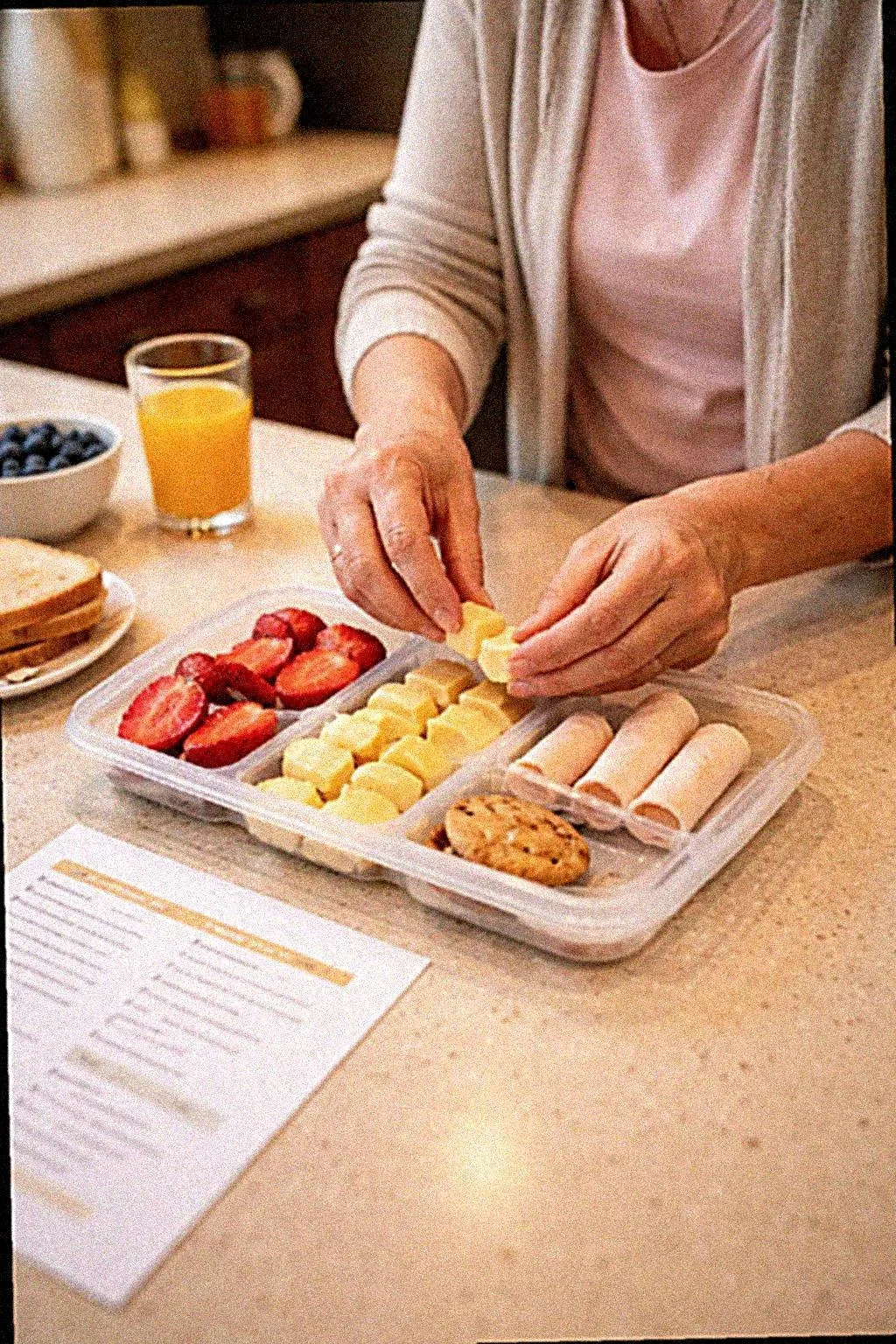
As dementia progresses, utensils become confusing. Finger foods sidestep the problem entirely — they restore independence, reduce mealtime frustration, and actually get eaten. A good finger food for a dementia patient is soft enough to be mashed between gums if needed, not a choking hazard (no round hard items like whole grapes), and distinctly colored so it reads visually as food.
Batch-prep these weekly:
- Mini toast fingers with soft fillings: egg salad, mashed avocado, cream cheese
- Soft-boiled eggs cut in half
- Turkey meatballs, small and very soft (bake at 375°F for 18–20 minutes)
- Soft cubes of shredded chicken thigh
- Cooked broccoli florets — roasted soft, not raw or steamed (they get mushy)
- Banana slices, melon cubes, quartered ripe pear
- Small containers of cottage cheese or full-fat Greek yogurt with a spoon nearby
None of these require you to be there for assembly. They sit in the fridge ready to go onto a plate.
Familiar Comfort Foods Are the Secret Weapon
Ask family members — or look through old cookbooks and recipe boxes — for dishes your loved one ate regularly throughout their life. Oatmeal. Chicken soup. Scrambled eggs. A specific casserole they made every holiday. These long-established food memories are often more accessible than recent ones.
Make these in bulk and freeze in individual portions. A homemade chicken soup that can come out of the freezer and be warm in five minutes is worth its weight in gold on the hard days. Make the same soup every week if that's what they recognize and accept. Familiar is not boring when you're working with dementia — familiar is exactly the point.
For more on building this kind of comfort-food rotation as a complete prep system, the batch cooking for caregivers framework applies directly here.
Small Portions More Often — Not Three Full Meals
Three full meals a day is often too much to ask of someone with moderate to advanced dementia. The plate is overwhelming, the sitting time is too long, the opportunity to forget and stop is too high. Most dementia patients do significantly better with 5–6 small offerings throughout the day.
Structure your prep around this: instead of making three full meals, prep 6 small portions that can be offered on a simple plate with two or three items maximum. This keeps blood sugar more stable, reduces mealtime overwhelm, and makes it much easier to get enough calories in during the shorter windows of attention you have.
A Sample Weekly Prep Session for Dementia Care
On Sunday — or whatever day works for your schedule — prep the following:
Proteins:
- 6–8 soft turkey meatballs
- 4–6 soft-boiled eggs
- 1 batch baked chicken thighs at 400°F for 35–40 minutes — pull from bone, shred fine
Soft produce:
- Roasted sweet potato cut into 1-inch cubes
- Roasted broccoli and carrots (425°F, 20 minutes — you want them soft, not crispy)
- Sliced banana, melon cubes — prep 2–3 days at a time max for freshness
Ready-to-reheat comfort foods:
- A pot of chicken soup — portion into individual containers, refrigerate what you'll use in 3 days, freeze the rest
- Steel-cut oat base cooked in bulk, refrigerated; individual portions reheat with a splash of milk and a mashed banana stirred in
This gives you a week's worth of offerings without cooking from scratch at every meal. The key word is offerings — you're not committing to them eating all of it. You're making sure something appropriate is always available when a window opens.
How to Present Food to Someone with Dementia
Reduce visual clutter. A plain white plate with two or three items is easier to process than a loaded plate with mixed foods touching each other. Use contrasting colors — bright food on a white plate, or creamy food on a darker plate. The brain needs clear visual signals to identify food as food.
Don't ask if they're hungry. The answer is frequently no, even when they haven't eaten all day. Instead: sit down with them, place the food in front of them, and say something simple and warm. "I made your favorite — try some." Join them at the table and eat something yourself if you can. Shared meals work better than supervised meals.
Offer one item at a time if multiple items cause confusion. Start with the most calorie-dense option first. One thing in front of them is an invitation; four things is a decision to make.
Warm the food. Smell triggers appetite. Even if they used to eat it cold, warming the food means the aroma reaches them before the plate does — and that makes a real difference in whether they engage with it.
Keep mealtimes consistent. Same times each day, same place, same setup where possible. Routine reduces anxiety in dementia care. The brain settles into familiar patterns even when it can't build new memories.
Managing the Hardest Moments
When they refuse to eat: Don't push it. Offer something very small — a piece of banana, two crackers — and come back in 20–30 minutes. Forcing food creates anxiety and resistance that makes the next mealtime harder. Come back later.
When they insist they already ate: Keep a simple log — a sticky note on the fridge works — of what they ate and when. This protects you from second-guessing yourself and gives you calm, factual ground to redirect from. "The note says you haven't had lunch yet — let's try some soup."
When eating becomes unsafe: Watch for coughing, choking, or pocketing food in the cheek — these are signs of dysphagia (swallowing difficulty), which is common in later-stage dementia. Talk to their doctor immediately. A speech-language pathologist can assess swallowing safety and recommend texture modifications. This isn't something to manage alone or wait on.
If you're also navigating recovery from a stroke alongside cognitive changes, the texture guidance in meal prep after stroke recovery for seniors covers pureed and soft food preparation in more detail.
Shortcuts Are Not Failure
I want to say this clearly because I've seen too many caregivers guilt themselves about it: using shortcuts is not failure. Your job is to make sure your loved one is nourished and safe. How you get there is up to you.
- Rotisserie chicken from the grocery store, pulled and shredded
- Pre-cut soft fruit from the produce section
- Individual oatmeal packets — lower sodium options exist
- Good-quality low-sodium canned soups as a backup
- A meal prep service that comes to your home (that's what we do)
This work is relentless. Planning six small meals a day for someone who may not thank you, may not recognize the effort, may push the plate away — that takes a real toll. You're allowed to use every resource available to you. The families I work with across the Bay Area who do best are the ones who stop treating help as a last resort and start treating it as part of the plan.
If you're researching this for a parent or loved one in the Bay Area, Justine Sanidad is available for a free 15-minute call this week. No form to fill, no commitment — she can tell you exactly how she handles dementia meal prep and whether she can help. Call (415) 971-3464 or book online.
Frequently Asked Questions
What are the best finger foods for someone with dementia?
The best finger foods for dementia are soft, distinctly colored, and safe to eat without utensils. Good options include soft turkey meatballs, banana slices, quartered ripe pear or melon cubes, mini toast fingers with cream cheese or egg salad, soft-boiled egg halves, and roasted broccoli florets cooked until tender. Avoid anything round and hard (whole grapes, nuts, raw carrots) — these are choking hazards. The goal is food that's visually recognizable, easy to pick up, and soft enough to manage even if chewing coordination is declining.
How do you get someone with dementia to eat when they refuse?
Don't ask if they're hungry — the answer is often no regardless. Instead, sit with them, warm the food so the smell is present before the plate arrives, and offer a single small item rather than a full plate. If they refuse, don't push. Come back in 20–30 minutes. Eating during a calmer moment is better than forced eating during a resistant one. Familiar comfort foods — foods tied to long-term memories — are often accepted when unfamiliar dishes aren't.
How many meals a day should a dementia patient eat?
Most people with moderate to advanced dementia do better with 5–6 small offerings throughout the day rather than 3 full meals. Smaller amounts reduce the overwhelm of a full plate, work with shorter attention windows, and keep blood sugar more stable. Think of it less as meals and more as regular opportunities to eat — a few bites of something nourishing every 2–3 hours.
How do I meal prep for dementia care without cooking every day?
One weekly prep session — about 2–3 hours — can cover most of the week. Cook proteins in bulk (shredded chicken thighs, soft turkey meatballs, hard-boiled eggs), make a large pot of comfort-food soup and freeze individual portions, roast soft vegetables, and prep a grain base. Store everything in individual portions in clear containers so you or another caregiver can assemble a plate in under 2 minutes. The batch cooking for caregivers guide covers this system in full.
When should I talk to a doctor about eating problems in dementia?
Talk to the doctor if your loved one is losing significant weight, if mealtimes are consistently resulting in less than half a meal being eaten over several days, or if you notice coughing, choking, or food being held in the cheek without swallowing. These can be signs of dysphagia (swallowing difficulty) or significant caloric deficit — both of which need professional assessment, not just meal adjustments. A speech-language pathologist referral is appropriate when swallowing safety is in question.
Looking for help with caregiver resources? Learn about our Caregiver Meal Support service →
We'll walk through your specific kitchen situation together — no pressure, no commitment.
Book Your Free Kitchen Assessment