If you're reading this, you're probably an adult child who's noticed something is off with a parent's eating. Maybe the fridge is emptier than it should be. Maybe your mom has lost weight and brushes it off. Maybe your dad is eating cereal for dinner five nights a week. Maybe you've been managing their meals remotely — ordering groceries, calling to check if they ate, worrying from a distance — and you're exhausted.
The question "is a personal chef for elderly parents worth it?" is really several questions packed into one: Is the cost justified? Will it actually improve my parent's health? Is this a real need or am I overreacting? Will my parent accept it?
I'm Justine Sanidad, and I run Well Prepped Life, an in-home meal prep service for seniors and disabled adults in the San Francisco Bay Area. I work with families navigating exactly this decision every week. I'm going to walk through the warning signs that indicate a parent genuinely needs meal support, the measurable health impact of good nutrition in older adults, the real cost calculus, and the practical realities of making this work — including the part where your parent might resist the idea.
Warning Signs Your Parent Needs Meal Help
Most parents won't ask for help with meals. They'll minimize, deflect, or insist everything is fine. These are the signs that tell a different story:
Unintentional Weight Loss
This is the most important red flag. If your parent has lost weight without trying — even 5–10 pounds over a few months — something is wrong with their nutrition. Unintentional weight loss in seniors is associated with increased mortality, faster cognitive decline, higher fall risk, and longer recovery from illness or surgery. It is not a normal part of aging. It is a medical concern that warrants immediate attention.
The tricky part: you might not notice gradual weight loss during regular visits, especially if your parent wears loose clothing. Pay attention to how their rings fit, whether their watch is looser, whether their face looks thinner. Ask their doctor to track weight at every visit.
The Fridge Tells a Story
Next time you visit, open the fridge. What you find — and what you don't find — is diagnostic:
- Expired food. Condiments from two years ago, milk past its date, leftovers with visible mold. This suggests your parent isn't managing food inventory, which is often a cognitive issue as much as a physical one.
- Almost empty. A fridge with just condiments, a few beverages, and maybe some cheese means your parent isn't grocery shopping effectively and isn't eating real meals.
- Full of untouched food. A fridge packed with groceries that aren't getting used is its own warning sign. It often means the shopping is happening (or someone is ordering groceries) but the cooking isn't. The barrier is preparation, not access.
- Heavy reliance on processed or convenience food. A freezer full of frozen dinners and a pantry of canned soup isn't a crisis, but it means your parent's diet is high in sodium, low in fresh nutrients, and probably not something they're enjoying.
Changes in Cooking Behavior
If your parent used to cook and has stopped — or has significantly simplified what they make — pay attention. The progression usually looks like this:
- Stops making complex recipes ("too much trouble")
- Shifts to simpler meals (sandwiches, canned soup, toast)
- Starts skipping meals ("I wasn't hungry" or "I forgot")
- Relies on snacking instead of meals (crackers, cookies, fruit)
- Stops eating adequate amounts altogether
Each stage represents declining capability, declining motivation, or both. By stage 3 or 4, nutritional deficiency is likely already underway.
Cognitive or Physical Changes That Affect Cooking
Specific conditions that directly impair cooking ability:
- Arthritis: Grip strength decline makes jar opening, chopping, and handling pots painful or impossible
- Vision loss: Reading recipes, checking food doneness, and navigating the kitchen safely become harder
- Balance issues: Standing at the stove is a fall risk
- Cognitive decline: Forgetting steps, leaving the stove on, mismanaging food safety (eating expired food, undercooking meat)
- Fatigue conditions: Not enough energy to cook, even when the knowledge and desire are there
- Depression or grief: Loss of a spouse (especially one who did the cooking) can devastate both motivation and capability
If your parent is dealing with any of these, the question isn't whether they need meal support — it's what kind.
What You're Hearing (and What It Means)
"I'm just not hungry." Appetite naturally decreases somewhat with age, but persistent lack of appetite often indicates depression, medication side effects, dental problems, or a medical issue. It can also mean the available food isn't appealing enough to motivate eating.
"I eat plenty." If you're hearing this but seeing weight loss, believe the weight loss. Many seniors genuinely believe they're eating enough when they're not. A bowl of cereal and a sandwich feels like "plenty" but may be 800 calories against a need of 1,600–2,000.
"I don't want to be a burden." This is the heartbreaker. Your parent knows they need help but won't ask because they don't want to inconvenience you. This is exactly the situation where bringing in a professional — someone whose literal job it is — removes the "burden" framing entirely.
The Health ROI of Proper Senior Nutrition
I want to ground this in evidence, not just feeling, because "good nutrition is important" is obvious. The specific mechanisms through which proper nutrition protects elderly health are what make the cost calculation concrete.
Malnutrition and Hospitalization
Malnutrition affects 15–50% of older adults depending on the setting and criteria used. Malnourished seniors have hospital stays that are 2–3 times longer than well-nourished seniors, with significantly higher complication rates. Studies consistently show that nutritional intervention reduces hospital readmission rates in older adults.
A single hospital admission in the Bay Area easily costs $10,000–$50,000+. The annual cost of a weekly personal chef service is $12,000–$24,000. If adequate nutrition prevents even one hospitalization, the financial math is straightforward.
Muscle Mass and Fall Prevention
Sarcopenia — age-related muscle loss — is directly influenced by protein intake. Seniors who eat inadequate protein lose muscle mass faster, which increases fall risk. Falls are the leading cause of injury-related death in adults over 65. A personal chef who plans meals with appropriate protein targets at every meal is delivering a fall-prevention intervention as much as a food service.
Medication Effectiveness
Many medications require food for proper absorption. Seniors who skip meals or eat irregularly may not be getting the full benefit of their medications — including medications for blood pressure, diabetes, thyroid conditions, and heart disease. Consistent, well-timed meals improve medication outcomes.
Cognitive Function
Nutritional deficiencies — particularly B vitamins, omega-3 fatty acids, and adequate overall caloric intake — accelerate cognitive decline. Proper nutrition doesn't prevent dementia, but inadequate nutrition demonstrably makes it worse and speeds progression. For families hoping to keep a parent living independently as long as possible, nutrition is one of the modifiable factors that actually matters.
Immune Function and Wound Healing
Poor nutrition suppresses immune function and dramatically slows wound healing. For seniors recovering from surgery, dealing with chronic wounds, or during cold and flu season, nutritional status directly affects outcomes. Adequate protein, zinc, vitamin C, and overall caloric intake are the nutritional foundations of immune and healing function.
The Real Cost Calculus
I've written a detailed pricing breakdown at how much does a personal chef for seniors cost, but here's the framework for evaluating whether it's "worth it":
What you're paying
At Well Prepped Life, weekly service runs $349–$849/wk + groceries depending on tier (see our pricing page for the full breakdown). The per-meal cost works out to roughly $20–$40 for a fully custom, fresh, chef-prepared meal tailored to your parent's specific dietary needs.
For context, Visiting Angels and similar agencies quote roughly $3,500/week for full home-aide coverage in the Bay Area. Even our Comprehensive tier ($849/wk) is less than one-fourth of that — and the meals are categorically better than what an aide will produce in the 30–45 minutes they have to cook between bathing, mobility, and medication tasks.
What you're getting
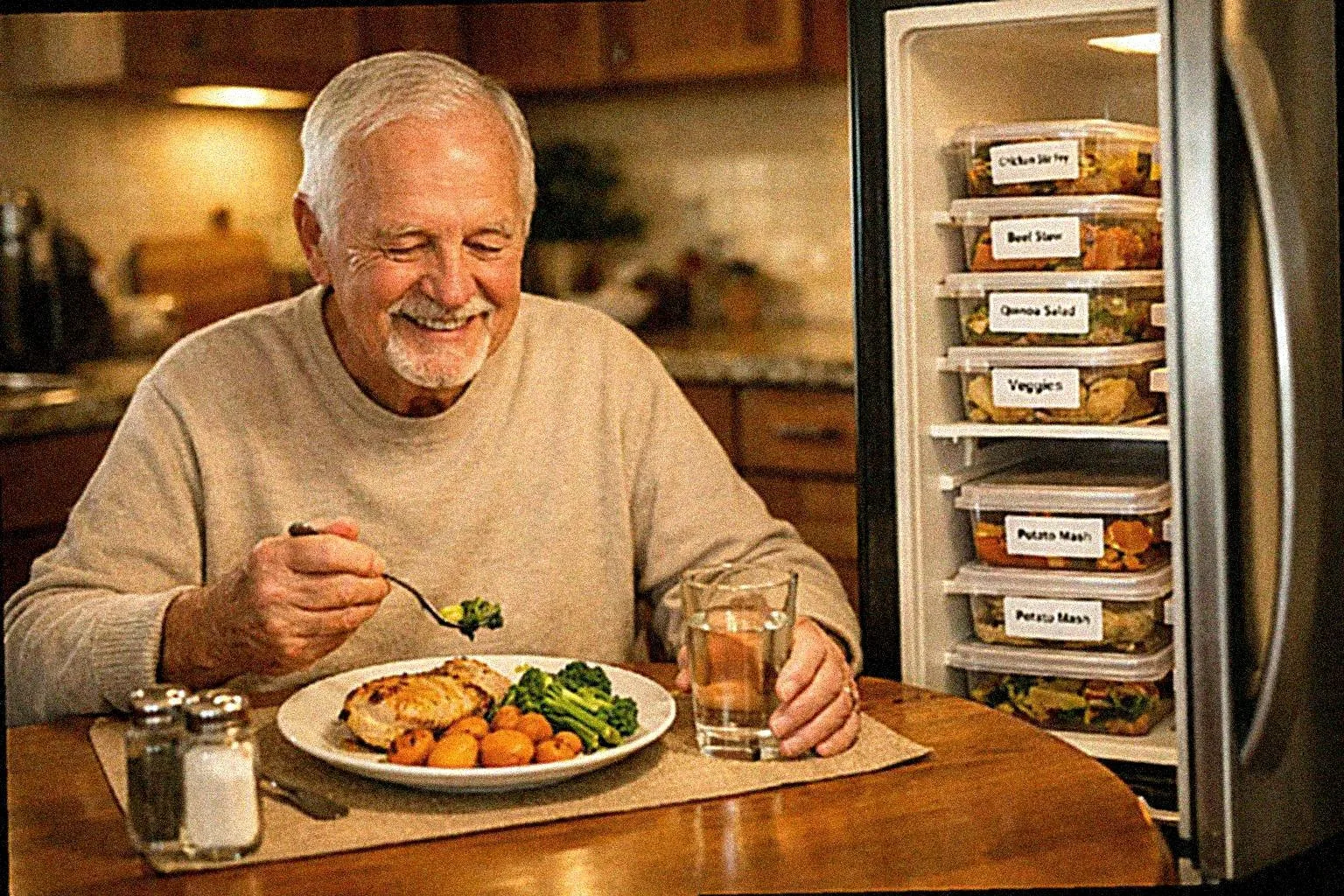
- 8–15 individually portioned, labeled meals per week stocked in the fridge
- Dietary precision for medical needs (low-sodium, diabetic, renal, texture-modified, etc.)
- Food your parent actually wants to eat, based on their preferences and cultural background
- A weekly in-person check on your parent by someone who knows them and notices changes
- Complete elimination of the shopping, planning, cooking, and cleanup burden
- Peace of mind that your parent is eating well — not just eating something
What you're avoiding
- A single ER visit after a fall typically runs $5,000–$25,000 in the Bay Area before any inpatient stay; a full hospitalization runs $10,000–$50,000+. Maintaining muscle mass through adequate protein is one of the most direct fall-prevention interventions available.
- Faster decline trajectory that leads to earlier need for assisted living ($5,000–$12,000+/month in the Bay Area)
- Your own time managing meals remotely (hours per week of planning, ordering, calling, worrying)
- Your own stress and guilt (this is real and it has health consequences for you too)
- The cascade of decline that begins with poor nutrition: weight loss, muscle loss, falls, hospitalization, decreased independence
The comparison that matters
If your parent is currently ordering restaurant delivery via DoorDash or Uber Eats several times a week — which many seniors in the Bay Area do — they're already spending $20–$30+ per meal on food that's high in sodium, inconsistent in quality, and not optimized for their health. Switching to a personal chef service may cost roughly the same or less per meal while delivering dramatically better nutritional outcomes.
Will My Parent Accept This?
This is often the hardest part. Many seniors resist the idea of having someone come cook for them. Common objections and how to handle them:
"I don't need help." Don't frame it as help. Frame it as a service — the same way they might hire a housekeeper or a gardener. "I found someone who comes once a week and stocks your fridge with meals you'll actually love. It's not about needing help — it's about eating better food with zero effort."
"That's too expensive." If you're covering the cost, be direct about that: "This is something I want to do because your nutrition matters to me, and I want you eating real food." If the parent is paying, walk through the cost comparison — it's often less than they think relative to what they're currently spending on suboptimal alternatives.
"I don't want a stranger in my house." This is valid and worth respecting. A good personal chef service starts with a low-pressure introduction — at Well Prepped Life, that's a free Kitchen Assessment where I come to the home, meet the person, and we talk. There's no commitment. Most clients who were initially reluctant warm up quickly once they see what the food actually looks and tastes like.
"I can cook for myself." If they can and do, they might not need this service. But if you're seeing the warning signs listed above — weight loss, empty fridge, simplified meals, skipped meals — "I can cook" and "I am cooking nutritiously and consistently" are different things. You can acknowledge their capability while noting that having chef-prepared meals in the fridge makes life easier even for people who can cook.
"Your [deceased parent] used to cook for me." Grief and food are deeply connected. For seniors who lost a spouse who did the cooking, meals can be a daily reminder of that loss. A personal chef who's sensitive to this — who asks about what the spouse used to make and incorporates those familiar flavors — can turn meals from a pain point into something comforting.
What to Expect in the First Month
Setting realistic expectations helps everyone:
Week 1: Assessment and first session. I come to the home, meet your parent, tour the kitchen, discuss dietary needs, preferences, and any medical requirements. If everyone's comfortable, we schedule the first cooking session. After that first session, the fridge is stocked with a week's worth of meals.
Week 2: Adjustment. Your parent tries the meals. I get feedback — what they loved, what they'd change, what they didn't finish. This feedback loop is critical. No chef gets it perfect the first time for a new client. The second session's menu is adjusted based on what I learned.
Weeks 3–4: Settling in. By the third or fourth session, I know your parent's preferences well. The meals are dialed in. Your parent knows the routine — they know when I'm coming, they know the fridge will be stocked, and most importantly, they know the food is good. This is usually when the resistance (if there was any) fully drops away, because the experience speaks for itself.
What you'll notice: Better eating consistency. Potential weight stabilization or gain if they were losing weight. More energy. Better mood — both from improved nutrition and from having a weekly social interaction with someone who genuinely cares about their wellbeing. And for you: significantly less stress about whether your parent ate today.
Signs It's Working
After 4–8 weeks of consistent personal chef service, the indicators I watch for — and that you should watch for — include:
- Weight stabilization or appropriate gain if weight loss was occurring
- Meals being consistently consumed (empty containers in the fridge, not full ones)
- Improved energy levels reported by the parent or observed by family
- Better engagement — more talkative, more active, more interested in things
- Fewer "I forgot to eat" days
- Improved lab values at the next doctor's visit (albumin, prealbumin, blood sugar stability)
- Your own stress level decreasing around your parent's nutrition
When It's Not the Right Fit
I want to be honest about when a personal chef isn't the answer:
- If the primary issue is cognitive decline severe enough that your parent can't safely reheat food or remember to eat even when food is available. In this case, your parent needs daily in-person meal assistance, not weekly meal prep. A home care aide who's there at mealtimes to serve and supervise eating is more appropriate. See personal chef vs home care aide for meal preparation for that comparison.
- If budget truly doesn't allow it and less expensive alternatives are available. Meals on Wheels, community meal programs, and family-prepared batch cooking are all legitimate options. A personal chef is the premium option, and it's not the only option. For a full comparison, see who provides fresh senior meal prep in the Bay Area.
- If your parent is genuinely cooking well and eating adequately. Not every parent who lives alone needs meal intervention. If the fridge is stocked, meals are being cooked and eaten, and weight is stable, your parent may be doing fine. Trust the evidence over your anxiety.
The Decision Framework
If you're still on the fence, here's how I'd think about it:
- Is there evidence of nutritional decline? (Weight loss, poor lab values, visible dietary deterioration.) If yes, intervention is needed — the question is which kind.
- Is the current meal situation sustainable? (Are you managing it remotely? Is a caregiver handling it adequately? Is your parent self-managing successfully?) If it's not sustainable, something needs to change before a crisis forces the decision.
- What's the cost of inaction? Not in abstract terms, but specifically: if nutrition continues to decline over the next 6–12 months, what's the likely trajectory? Hospitalization? Accelerated need for assisted living? Falls?
- Can the family afford $1,000–$2,000/month for dramatically better nutritional outcomes? If yes, this is one of the highest-ROI investments in a parent's health and independence.
Taking the Next Step
If you've read this far, you're taking your parent's nutrition seriously — and that already puts you ahead of most families who don't recognize the problem until it becomes a crisis.
The best next step is a conversation. I'll ask about your parent's situation — what's going on with their eating, what their health conditions are, what's been tried, and what your concerns are. If Well Prepped Life is the right fit, I'll explain exactly what the service looks like and what it costs for their specific needs. If something else makes more sense, I'll say that directly.
Call (415) 971-3464 or book a free Kitchen Assessment. I serve seniors and disabled adults across the San Francisco Bay Area including San Francisco, the Peninsula, Marin, and the East Bay. If you're an out-of-town adult child managing care remotely, I work with remote families regularly and can coordinate directly with you by phone or email. Our personal chef for elderly parents guide is written specifically for the adult-child decision-maker.
Frequently Asked Questions
How do I know if my elderly parent needs a personal chef?
The clearest indicators are unintentional weight loss, a fridge that's empty or full of expired food, simplified or skipped meals, and declining cooking activity. If your parent used to cook regularly and has gradually stopped, or if they're relying on cereal, canned soup, and snacks instead of complete meals, their nutrition is likely suffering. A personal chef provides consistent, high-quality meals tailored to their specific needs — addressing the root cause of nutritional decline.
Will my parent accept having a personal chef?
Most initial resistance fades quickly once the parent experiences the service. The food does the convincing. Frame it as a premium food service rather than "help," start with a low-pressure introduction like a free Kitchen Assessment, and let the quality of the meals speak for itself. In my experience, parents who were initially reluctant become enthusiastic once they taste food that's actually been cooked for them with care and skill.
Is a personal chef for elderly parents covered by insurance?
Traditional health insurance and Medicare generally do not cover personal chef services. However, some long-term care insurance policies include in-home support service benefits that may apply. Veterans' Aid and Attendance benefits may also be applicable. Additionally, if meal preparation is medically prescribed (such as for management of diabetes, renal disease, or post-surgical recovery), it may qualify as a deductible medical expense. Consult your specific insurance provider and tax advisor for details.
How does a personal chef help prevent hospitalization in seniors?
Proper nutrition directly reduces hospitalization risk in older adults through multiple mechanisms: maintaining muscle mass reduces fall risk, adequate protein and calories support immune function and wound healing, consistent meals improve medication absorption and effectiveness, and stable weight prevents the decline cascade that leads to acute medical events. Studies show that malnourished seniors have hospital stays 2–3 times longer than well-nourished seniors. Investing in nutritional quality is one of the most cost-effective preventive health measures for older adults.
Looking for help with personal chef? Learn about our Personal Chef for Seniors service →
We'll walk through your specific kitchen situation together — no pressure, no commitment.
Book Your Free Kitchen Assessment