
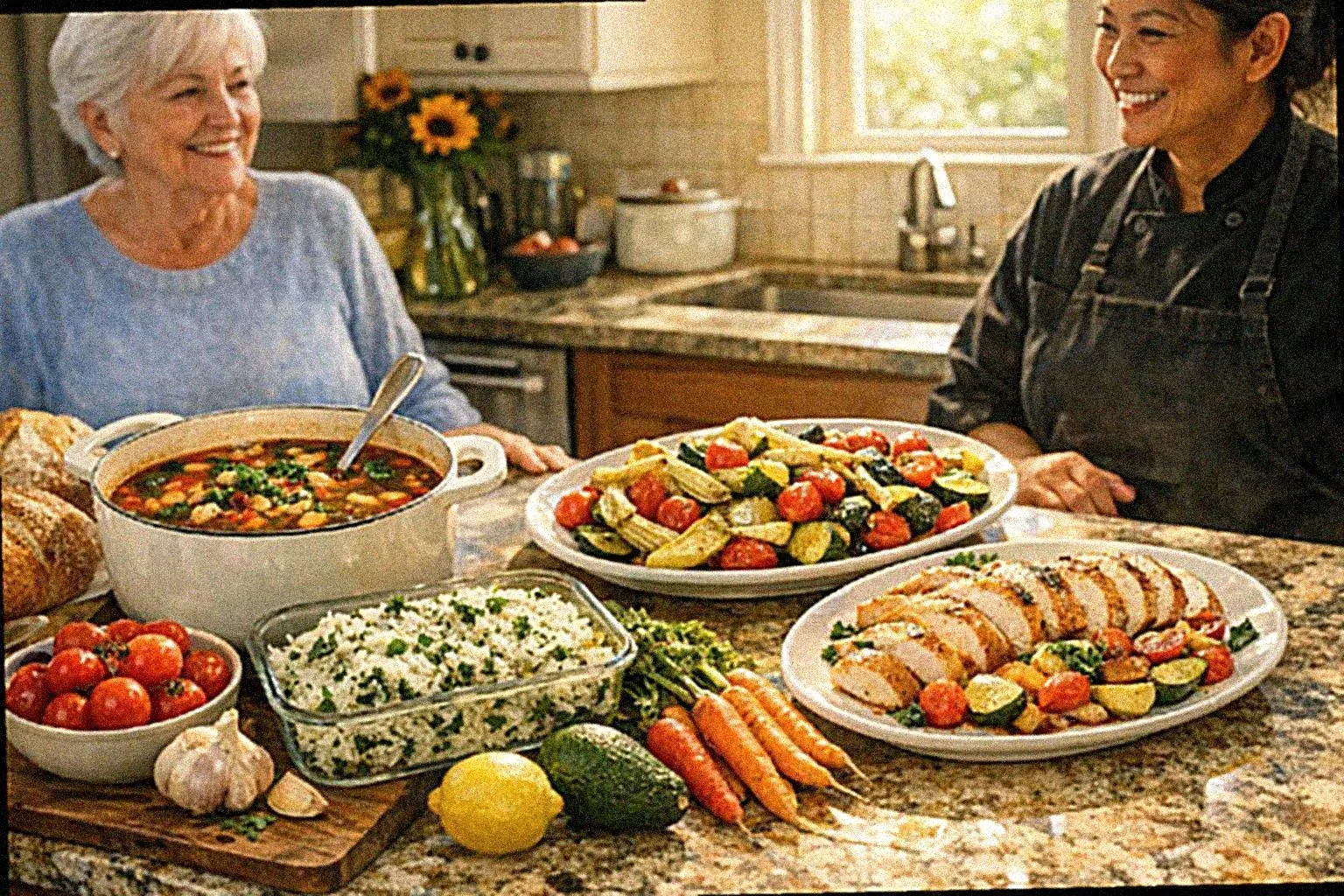
If you're looking for fresh senior meal prep in the Bay Area — whether for yourself or for an aging parent — you've probably already discovered that the options are confusing. There are national meal delivery services, local programs like Meals on Wheels, meal kit companies, grocery delivery apps, home care agencies that include meal preparation, and private personal chef services like what I do at Well Prepped Life. They're all "meal help," but they're not all the same thing, and they don't all solve the same problem.
I'm going to walk through the major categories honestly. I run an in-home meal prep service, so I obviously believe in what I do — but I also know it's not the right fit for every situation, and some of the alternatives are genuinely excellent for the right person. The goal here is to help you figure out which option actually matches what you or your parent needs.
Meals on Wheels and Government-Funded Meal Programs
Meals on Wheels is the most well-known senior meal program in the country, and the Bay Area has strong local chapters. In San Francisco, Meals on Wheels SF delivers over 2,000 meals daily to homebound seniors. Similar programs operate in Marin, the East Bay, and the Peninsula through local Area Agencies on Aging.
What you get: Pre-made meals delivered to the home, typically one meal per day (lunch), Monday through Friday. Some programs offer weekend meals or frozen meals for non-delivery days. Meals are nutritionally balanced and often accommodate common dietary needs like low-sodium or diabetic-friendly.
What's good about it: Cost is the biggest advantage. Most Meals on Wheels programs are free or donation-based for seniors who qualify. There's also a social component — the daily delivery includes a wellness check, which matters a lot for isolated seniors. The programs are well-established and reliable.
What's limited: You don't choose what you eat. Meals are pre-set menus, and while they're nutritionally adequate, they're institutional food — reheated, portioned, and designed for mass production. If your parent has specific cultural food preferences, complex dietary restrictions, or strong opinions about what they want to eat, the menu may not feel like real food to them. There's also the dignity factor: some seniors resist Meals on Wheels because it feels like charity, even when the food would help.
Best for: Seniors on a fixed income who need reliable daily nutrition and benefit from the social contact of regular delivery. Especially valuable for homebound seniors who qualify for free or subsidized meals.
National Meal Delivery Services
Companies like Trifecta (3.4★, 1,005 reviews — by far the largest player by review volume in the Bay Area, and one of the most complained-about for hidden subscription charges and impersonal service), Silver Cuisine by bistroMD, Magic Kitchen, Mom's Meals, Sunbasket, Aspire, and BistroMD ship frozen or refrigerated meals directly to seniors. Some are medically tailored (renal diet, pureed meals, heart-healthy). Others are more general.
What you get: Pre-made meals shipped in bulk (usually weekly), stored in the fridge or freezer, and reheated when ready to eat. Most require a microwave. Pricing typically runs $8–$15 per meal depending on the service and plan.
What's good about it: Convenience and variety. Most services offer 15–30+ menu options per cycle, which is a huge improvement over a fixed daily delivery. Medically tailored options are genuinely useful for seniors managing specific conditions. No cooking required — just reheat.
What's limited: It's still reheated food. Even the best shipped meal doesn't taste like something cooked fresh in the kitchen an hour ago. Packaging waste is significant. And the meals are designed generically — they don't account for individual taste preferences, cultural backgrounds, or the specific way your parent likes their chicken prepared. There's also a practical barrier: if your parent has cognitive decline, managing a freezer full of labeled meals and operating a microwave consistently may not be realistic.
Best for: Seniors who are cognitively independent, comfortable with reheating meals, and want more variety than Meals on Wheels provides. Good as a supplemental option alongside other meal support.
Meal Kit Services
Blue Apron, HelloFresh, Sun Basket, and similar services deliver pre-portioned ingredients with recipe cards. Some have "quick prep" or simplified options.
What you get: Raw ingredients and instructions to cook a meal from scratch. Most meals take 30–45 minutes to prepare.
What's limited for seniors: I'll be direct — meal kits are generally not a good fit for most seniors who need meal prep help. If someone is looking for senior meal prep support, it's usually because cooking has become difficult, unsafe, or exhausting. Meal kits still require full cooking: standing at the stove, chopping, managing multiple steps. They also assume a level of kitchen confidence and physical capability that's often exactly what's declining. The portions are usually designed for 2–4 people, and recipe complexity can be overwhelming for someone with cognitive changes.
When it might work: If your parent is still an active, capable cook who just wants to skip grocery shopping and try new recipes, meal kits can be great. But that's a different situation than needing meal prep support.
Grocery Delivery Services
Instacart, Amazon Fresh, Safeway delivery, and similar services deliver groceries to the door. Some offer "senior-friendly" options or work with SNAP/EBT benefits.
What you get: Groceries delivered, so the shopping barrier is removed. Your parent still needs to cook.
What's good about it: Removes one of the hardest physical tasks for seniors — getting to the store, walking the aisles, carrying bags. For seniors who can still cook but shouldn't be driving or hauling groceries, this is genuinely helpful. Cost is just the grocery bill plus delivery fees (typically $5–$10 per order, or a monthly subscription).
What's limited: Grocery delivery solves the shopping problem but not the cooking problem. If your parent is skipping meals because cooking is too tiring, too painful, or too confusing, having a fridge full of raw ingredients doesn't change anything. I've seen this pattern repeatedly: a well-meaning adult child sets up grocery delivery, the fridge fills up, and the food spoils because the actual barrier was never shopping — it was cooking.
Best for: Seniors who are still cooking independently but need help with the physical demands of grocery shopping. Works well combined with other meal support.
Home Care Agencies with Meal Preparation
Many home care agencies — Home Instead, Visiting Angels, local Bay Area agencies — include "meal preparation" as part of their caregiving services. A home care aide comes to the home for a set number of hours and prepares meals as part of broader caregiving duties.
What you get: A caregiver who handles meals alongside other tasks like light housekeeping, medication reminders, companionship, and personal care. Meal preparation is typically one component of a multi-hour shift.
What's good about it: If your parent needs help with multiple daily tasks, bundling meal prep into a home care package makes logistical sense. The aide is already in the home, and cooking is part of the care plan. For seniors with significant care needs, this integrated approach works.
What's limited: Home care aides are caregivers, not cooks. Meal prep training in most home care agencies is minimal — heat something up, make a sandwich, boil pasta. If your parent has specific dietary needs, cultural food preferences, or wants food that actually tastes good and is thoughtfully prepared, a home care aide's cooking may not meet that bar. I say this with genuine respect for home care workers — they do incredibly hard, important work. But cooking is a specialized skill, and it's rarely the reason someone went into caregiving. For a deeper look at this distinction, see personal chef vs home care aide for meal preparation.
Best for: Seniors who need broad daily care support where meals are one of many needs being addressed. Less ideal when nutrition quality and food enjoyment are primary concerns.
In-Home Personal Chef and Meal Prep Services
The local personal-chef segment is small but credible: Chefs for Seniors (national franchise with Bay Area presence; closest in operational shape to what we do — weekly/biweekly visits, ingredient sourcing, kitchen cleanup, no contracts; no documented medical-diet specialization), NutriGastro (4.8★ — strong personal-chef + nutrition operation, but no senior or adaptive-cooking focus), Cozymeal, Big City Chefs (event-oriented), and a handful of independent operators (Chef Johanna, Dinner Elf, White Apron, Sk:Cook). Most of these are pitched at general adult clients, not seniors with medical-diet needs.
This is what I do at Well Prepped Life — and where we're different is the deliberate senior + adaptive-cooking focus. I come to your parent's home, plan menus based on their dietary needs and preferences, shop for fresh ingredients, cook everything in their kitchen, portion and store meals in the fridge, and clean up completely when I'm done. The fridge is stocked with 3–5 days of ready-to-eat meals that just need reheating. Pricing is published — three tiers ($349/$549/$849 weekly + groceries) on our pricing page — which itself is unusual in this segment.
What you get: Fully custom meals cooked fresh in the home, tailored to specific dietary requirements (low-sodium, diabetic-friendly, heart-healthy, soft/mechanical soft, cultural preferences), stored and labeled for easy access. Menu planning, grocery shopping, cooking, portioning, and full kitchen cleanup are all included.
What's good about it: The food is genuinely good. That matters more than people realize — seniors who enjoy their food eat more of it, which directly affects nutrition, weight maintenance, energy, and health outcomes. Everything is customized: if your mom only likes her rice a certain way, that's how I make it. If your dad needs pureed meals but refuses to eat anything that looks like baby food, I figure out how to make pureed food that looks and tastes like real food. There's no menu you're stuck with. The meals change based on what's in season, what your parent is craving, and what their doctor recommends.
The in-home aspect matters too. Your parent's kitchen smells like cooking. There's a real person in the home who knows them, talks to them, and notices if something seems off. That human connection is part of the service, even though it's not on the invoice.
What's limited: Cost. A personal chef service is more expensive than Meals on Wheels or frozen meal delivery. It's a premium service, and it's not subsidized. For seniors on a very tight fixed income without family financial support, this may not be accessible. I'm transparent about pricing — see how much does a personal chef for seniors cost for a detailed breakdown.
Scheduling is also a factor. I serve the San Francisco Bay Area, and sessions are typically weekly or biweekly. If someone needs daily meal support, a personal chef service alone may not cover every meal — though the meals I prep are designed to last between sessions.
Best for: Seniors and disabled adults who value food quality, have specific dietary needs, and want genuinely custom meals prepared fresh in their home. Especially valuable for seniors with complex dietary restrictions, cultural food preferences, or medical nutrition needs that generic meal services can't accommodate.
How to Decide: A Practical Framework
Rather than ranking these options, here are the questions that actually determine which one fits:
What's the real barrier? If it's shopping, grocery delivery might be enough. If it's cooking, you need someone who cooks. If it's eating (appetite, motivation, depression), you need food that's genuinely appealing, not just nutritionally adequate.
What's the budget? If cost is the primary constraint, start with Meals on Wheels and supplement with grocery delivery. No shame in that — these programs exist for exactly this reason. If there's more flexibility, a personal chef service delivers dramatically better food and a better experience.
How complex are the dietary needs? Generic meal delivery handles basic dietary categories. If your parent needs a specific combination — say, low-sodium, soft diet, culturally specific — a personal chef is often the only option that can actually deliver all of that simultaneously.
Is your parent still cooking at all? If they are and want to continue, cooking life skills instruction might be more appropriate than having someone cook for them. If cooking has become unsafe or unrealistic, full meal prep is the right call.
Does your parent live alone? The social component matters. Meals on Wheels provides a daily check-in. A personal chef provides a longer, more personal interaction weekly. Home care aides provide the most hours of human contact. Isolation is a genuine health risk for seniors, and meal services that include real human interaction address two problems at once.
Combining Options
Most families I work with don't use just one service. A common setup looks like this:
- Well Prepped Life once a week for 3–5 days of high-quality, custom meals
- Grocery delivery for staples, snacks, and breakfast items between sessions
- A few frozen meals from a delivery service as backup for unexpected needs
Another common combination for seniors with higher care needs:
- Home care aide for daily personal care and companionship
- Well Prepped Life weekly for actual meal quality, because the aide handles reheating but the food itself is chef-prepared
There's no single right answer. The right answer is the combination that keeps your parent well-fed with food they'll actually eat, within a budget that's sustainable.
Getting Started
If you're exploring fresh meal prep options for a senior in the Bay Area — whether it's for yourself or for a parent — I'm happy to talk through what makes sense for your specific situation. Not every family needs a personal chef, and I'll tell you that honestly. But if food quality, dietary customization, and the in-home experience matter to you, that's exactly what Well Prepped Life provides.
Call me at (415) 971-3464 or book a free Kitchen Assessment to start. I serve the San Francisco Bay Area including San Francisco, the Peninsula, Marin, and parts of the East Bay. For a city-by-city look, our meal prep service Bay Area guide breaks down what's actually available locally and how the providers stack up.
Frequently Asked Questions
What is the best meal delivery service for seniors in the Bay Area?
It depends on what "best" means for your situation. For cost, Meals on Wheels SF and local Area Agency on Aging programs are hard to beat — most are free or donation-based. For variety and convenience, national services like Silver Cuisine or Mom's Meals offer more menu choice. For food quality, dietary customization, and a genuinely personal experience, an in-home meal prep service like Well Prepped Life provides the highest quality but at a higher price point. The best option is usually a combination tailored to the senior's specific needs and budget.
How much does senior meal prep cost in the Bay Area?
Costs range widely. Meals on Wheels is typically free or donation-based. National frozen meal delivery services run $8–$15 per meal. Home care agencies that include meal prep charge $30–$45 per hour (with meals as one of several services during that time). Private personal chef services for seniors range from $250–$500+ per session, which typically produces 8–15 individually portioned meals — working out to roughly $20–$40 per meal for fully custom, fresh, chef-prepared food. See how much does a personal chef for seniors cost for a detailed breakdown.
Can meal prep services accommodate special diets for seniors?
Most meal delivery services accommodate basic dietary categories like low-sodium, diabetic-friendly, or vegetarian. For more complex or specific needs — pureed or mechanical soft diets, renal diets, cultural food preferences, multiple simultaneous restrictions — an in-home personal chef service offers the most flexibility because every meal is custom-planned and prepared for that specific person. If your parent's dietary needs go beyond checking a box on an order form, a personalized approach is usually necessary.
Looking for help with senior meal prep? Learn about our Meal Prep for Seniors service →
We'll walk through your specific kitchen situation together — no pressure, no commitment.
Book Your Free Kitchen Assessment