
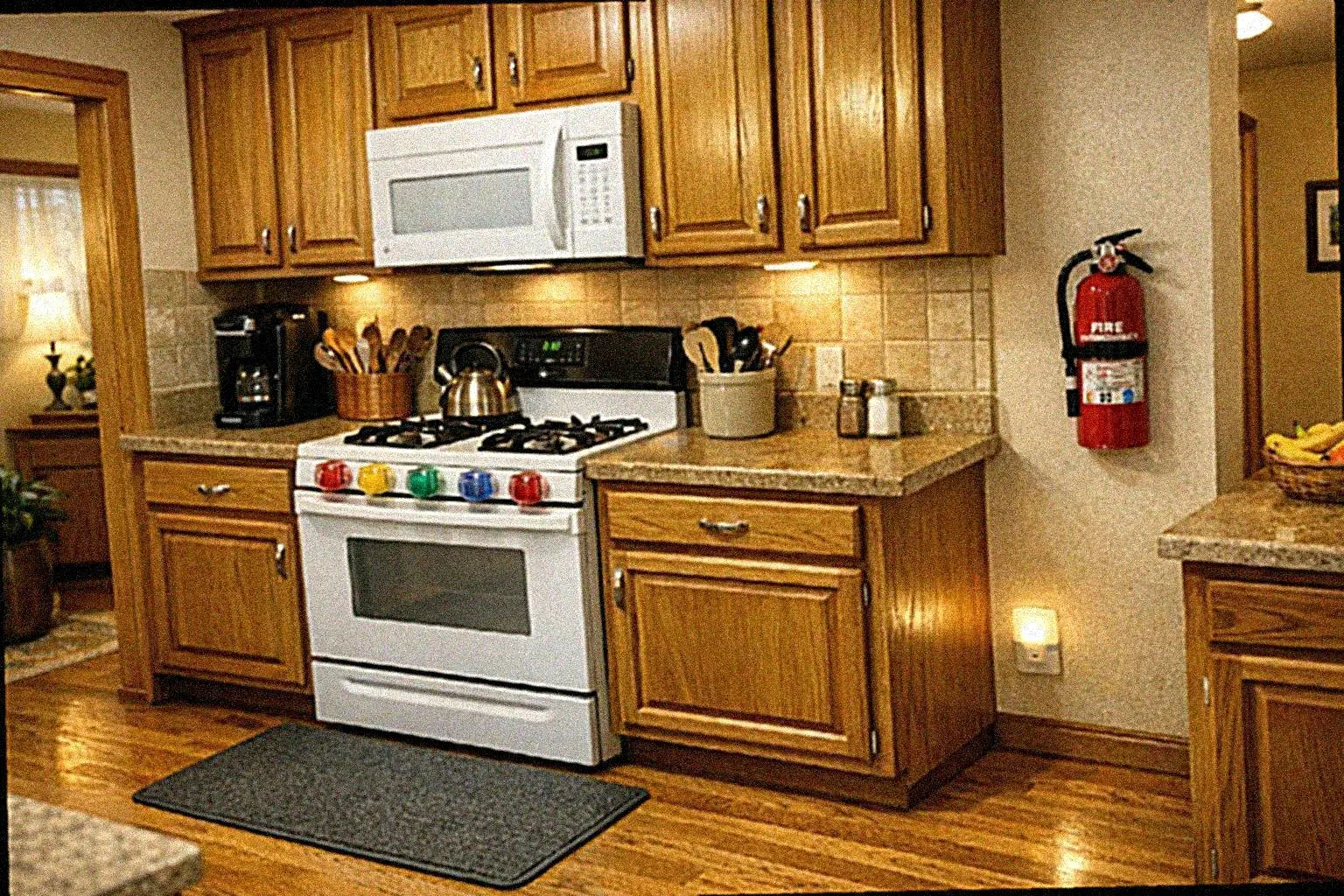
Kitchen safety tips for elderly parents living alone are something I talk about with families constantly. It's one of the most common conversations I have in the Bay Area — an adult child who's worried about their parent, who wants to keep their independence, and who doesn't know where to start making the kitchen safer without making it feel like they've been stripped of autonomy.
Here's what I tell them: the goal is not to childproof the kitchen. The goal is to give someone you love the freedom to keep doing the thing they've always loved to do. Most of these fixes are inexpensive, take an afternoon, and make an enormous difference in day-to-day confidence — both for the parent and for you.
The kitchen is the most accident-prone room in the home for older adults. Burns, falls, forgotten burners, and slippery floors account for a significant share of household injuries among seniors. The vast majority of those accidents are preventable. Here are the 12 changes I recommend most often.
The Most Common Kitchen Hazards for Elderly Adults Living Alone
Before getting into the fixes, it's worth naming the actual risks. These are the hazards I see most often during Kitchen Assessments:
- Stovetop fires from unattended or forgotten burners
- Slips and falls on wet or uneven floors
- Burns from steam, hot pans, and spills
- Cuts from dull knives (yes — dull knives are more dangerous)
- Overhead reaching for heavy items stored too high
- Poor lighting making hazards invisible
- Medications stored near food creating confusion risk
- Old appliances without auto-shutoff features
Go through this list with your parent. Not as a lecture — as a starting point for "what makes sense to fix first."
Fire and Heat Safety
1. Install a Smart Stove Shut-Off Device First
Forgetting a burner is one of the most common and most dangerous kitchen habits that develops as we age. This doesn't mean your parent is losing their mind. It means the brain is managing more tasks simultaneously than it used to, and the stove gets left running while attention moves elsewhere. It happens to everyone. The problem is the consequence.
Auto-shutoff stove devices detect if a burner has been left on past a set time limit — typically 5–10 minutes without activity nearby — and shut it down automatically. Wallflower ($99) and iGuardStove ($149) are the two brands I point families toward most often. Both install without professional help and take about 10 minutes to set up.
This is not optional. Cooking fires are the leading cause of home fires among older adults. Fix this one first, before anything else on this list.
2. Upgrade to Silicone Oven Mitts with Extended Cuffs
The worn fabric oven mitts that have been in the drawer since 1998 do not protect the way they used to. Fabric degrades. Heat transfers through thin, slightly damp fabric much faster than most people realize, and wrist burns happen when mitts don't extend far enough up the forearm.
Silicone oven mitts grip better, protect against higher temperatures for longer (most silicone mitts are rated to 450–500°F), and wash easily. Look for ones with extended cuffs that cover the wrist and lower forearm — that's where most kitchen burns actually land. Good silicone mitts run $15–$25 and are a genuinely joyful upgrade.
Bonus tip: Bright colors are easier to spot in a drawer and harder to accidentally leave on a still-warm burner.
3. Keep a Small Fire Extinguisher Visible and Within Reach
Not in a cabinet. Not under the sink. Mounted on the wall near the stove, or sitting on the counter where it can be seen and grabbed without bending or stretching.
A small kitchen fire extinguisher costs around $20–$25 and lasts years. More importantly: make sure your parent actually knows how to use it. Spend ten minutes together going over the PASS technique: Pull, Aim, Squeeze, Sweep. That ten-minute conversation could matter enormously one day.
Also keep an accessible lid for every pot on the stove. Smothering a small pan fire with a lid is often more instinctive than reaching for an extinguisher, and it works on grease fires where water would make things far worse.
Falls and Floor Safety
4. Remove the Kitchen Rug — or Replace It Properly
Kitchen rugs are among the most common tripping hazards in the home for older adults, no cap. They curl at edges, slide on tile, and catch on slipper soles in ways that happen fast. The fix isn't to live on a bare hard floor — it's to swap to a flat, rubber-backed non-slip mat designed for kitchen use.
Look for mats with no raised edges, a grippy rubber underside, and enough surface cushioning for comfortable standing — this matters especially for long cooking sessions. Brands like Gorilla Grip and Tractor make good kitchen mats in the $25–$45 range.
If your parent is resistant to changing the rug they love: explain that the concern isn't the rug itself, it's the underside grip and the edge curl. A non-slip rug pad ($15–$20) cut to fit under the existing rug addresses both, without requiring a change of decor.
5. Keep Paper Towels Within Arm's Reach of Every Work Zone
A wet floor is a dangerous floor. The problem usually isn't lack of awareness — it's lack of convenience. If the paper towels are across the kitchen when a spill happens at the stove, there's a real chance the spill doesn't get wiped up immediately. That's how a small spill becomes a fall.
Put a paper towel holder at the stove and another near the sink. Having them within reach removes the friction that turns "I should clean that up" into "I'll get it in a minute."
This is one of those tips that sounds too simple to matter. It isn't.
6. Move Heavy and Frequently Used Items to the "Sweet Zone"
Overhead reaching and deep crouching are two of the most common ways kitchen accidents start for older adults. The cast iron pan on the top shelf, the heavy stock pot in the back of a low cabinet — these setups are fine at 50 and genuinely hazardous at 75.
The sweet zone is hip height to shoulder height. Everything your parent reaches for regularly should live here. Pots, pans, everyday dishes, pantry staples — all of it. Rarely used items can go higher or lower, and they should be lighter.
If some items truly need to stay up high, invest in a sturdy, low step stool with a handle grip designed for kitchen use — specifically, one that locks open and has a non-slip surface. Not a chair. Not a wobbly step stool. Something with a handle that stabilizes the user while stepping. These run $30–$60 and are worth it.
Knives and Appliances
7. Sharpen the Knives — Seriously
A dull knife is more dangerous than a sharp one. This genuinely surprises most people the first time they hear it, but it's well-documented and I bring it up at almost every Kitchen Assessment. A dull blade requires much more force to cut through food, and that extra force is what causes the knife to skid sideways off a tomato and into a finger.
Most home kitchen knives have not been sharpened in years. A simple pull-through knife sharpener costs $12–$20 and takes about 10 seconds to use. This is a five-minute, under-$20 fix that meaningfully reduces cut risk.
Also: While you're at it, check that knives are stored safely — in a knife block or a magnetic strip, not loose in a drawer where a searching hand can contact the blade.
8. Audit Every Appliance for Auto-Shutoff
Most modern electric appliances — kettles, coffee makers, toasters, rice cookers — have auto-shutoff built in. Older appliances often don't. For a parent living alone, an appliance that turns itself off is a safety feature, not a convenience feature.
Go through the kitchen together and check each one. Anything that's very old, that lacks auto-shutoff, or that has frayed or damaged cords gets replaced. This is also a good moment to confirm that nothing is plugged in directly next to the sink.
One more thing: Unplug appliances not in daily use. A toaster sitting plugged in all day every day when it's only used three times a week is an unnecessary fire risk that takes two seconds to eliminate.
Lighting
9. Improve Lighting Under Cabinets and Near the Stove
Vision changes significantly with age. Lighting that felt perfectly fine at 45 may genuinely be inadequate at 72 — even if it doesn't feel that way, because the change has been gradual. Shadows near the cutting board, dim corners near the stove, and poorly lit cabinet interiors make everyday tasks harder and riskier.
Under-cabinet LED light strips are inexpensive ($15–$35 for a plug-in set), easy to install (double-stick tape, no wiring required), and make a remarkable difference in how usable a kitchen counter feels. Motion-activated night lights near the kitchen entrance are also worth adding — early morning trips to make tea before overhead lights are turned on can happen in near darkness, and that's when falls occur.
Bright enough isn't subjective. If there's a shadow on the cutting board while chopping, it's not bright enough.
10. Use Timers as a Cooking Habit, Not as a Reminder System
There's a gentle art to this one. Suggesting your parent set a timer every time they cook can feel like an implication that they can't be trusted. The framing matters.
"I always forget things on the stove and use a timer for literally everything now — it's a game changer" lands completely differently than "you should set a timer so you don't forget to turn the stove off." One builds a shared habit. The other stings.
A simple digital kitchen timer is great. So is asking a smart speaker (Alexa, Google Home) to set timers — if your parent already uses one, this is an easy habit to build into existing behavior. For stovetop cooking specifically, this is one of the most effective habits I've helped families establish.
Organization and Wellbeing
11. Move Medications Out of the Kitchen
A lot of older adults keep medications on the kitchen counter because it's the room where they spend time in the morning — and that makes total sense as a habit. But medications stored near spices or on the same surface as food can be confused, double-dosed accidentally, or taken with something they shouldn't be combined with.
A simple pill organizer in the bedroom or bathroom — somewhere consistent, away from the kitchen — eliminates this risk. If the kitchen routine truly feels right and your parent won't change it, a dedicated, clearly labeled medication drawer (not shared with any food storage) is the next best option.
This is a quiet fix that most families don't think of until there's been a near-miss.
12. Set Up a Daily Check-In and Actually Do It
This is the safety tip that has nothing to do with equipment, and it might be the most important one on the list. An older adult living alone who has a fall or an accident in the kitchen needs someone to know quickly. The longer the gap between an incident and discovery, the worse the outcome.
A daily check-in doesn't have to be a formal phone call. It can be a text, a shared app, a neighbor who waves hello each morning, or a medical alert device worn around the wrist or neck (Life Alert, Bay Alarm Medical — both solid options in the $25–$35/month range). The specific method matters far less than the consistency.
Many older parents resist this because it feels like monitoring. Reframing it — "I need this for my own peace of mind, not to check up on you" — is often genuinely true, and it changes the dynamic. You're not treating them as incapable. You're staying connected.
The Five Things to Do This Weekend
If this list feels overwhelming: here are the five highest-impact changes, in order:
- Install a stove auto-shutoff device (Wallflower ~$99, iGuardStove ~$149) — do this first
- Replace worn oven mitts with silicone mitts with extended cuffs ($15–$25)
- Remove or replace rugs and mats without non-slip backings
- Reorganize one cabinet so daily-use items are between hip and shoulder height
- Establish a daily check-in — decide on the method together and start it this week
These five things address the highest-frequency hazards and can realistically be completed in a weekend. Everything else on this list is valuable, but these five are where to start.
For more kitchen independence and safety resources, see the adaptive cooking tools guide for seniors with arthritis, the full wheelchair accessible kitchen organization guide, and the cooking life skills guide for disabled adults in the Bay Area.
If you'd like a professional eye on your parent's specific kitchen setup, book a free Kitchen Assessment. I'll walk through the space with you, identify what actually needs attention, and give you a practical prioritized list — no pressure, no obligation, just useful information.
Frequently Asked Questions
What is the most important kitchen safety upgrade for an elderly parent living alone?
If I had to pick one: install an auto-shutoff stove device. Stove fires and unattended burners are the leading kitchen hazard for older adults living alone, and a device like Wallflower ($99) or iGuardStove ($149) addresses that risk directly with no changes to cooking habits required. It's a one-time install that provides ongoing protection regardless of whether a burner gets forgotten.
How can I make my elderly parent's kitchen safer without taking away their independence?
Frame safety changes as upgrades and conveniences, not restrictions. Sharp knives, good silicone oven mitts, non-slip mats, and better lighting all make the kitchen work better — they don't limit what your parent can do. Involve them in the decisions and explain the reasoning. Changes that are imposed feel like loss; changes that are decided together feel like improvement. A Kitchen Assessment with a professional can also help identify changes that make a real difference versus ones that aren't necessary.
Are there specific fall prevention products recommended for elderly kitchens?
Yes. Non-slip kitchen mats with rubber undersides and no raised edges (Gorilla Grip, Tractor brands — $25–$45) replace hazardous rugs. Under-cabinet LED lighting ($15–$35) eliminates the shadows that make floor hazards invisible. Reorganizing storage so nothing requires overhead reaching or deep crouching removes two of the most common ways falls start in the kitchen. A step stool with a built-in handle grip ($30–$60) is worthwhile if reaching up is unavoidable.
What should I do if my elderly parent forgets to turn off the stove?
Install an automatic stove shutoff device immediately. Both Wallflower and iGuardStove monitor stove activity and shut off burners that have been left on too long — they don't require the person to remember to do anything. Beyond that, positioning a timer (digital or a smart speaker) in the kitchen and building a habit of setting it whenever the stove is on provides a backup alert. If forgetting the stove is happening frequently, this is also worth discussing with their physician as it can be an early indicator worth tracking.
When should I consider hiring in-home meal prep support for an elderly parent?
When the kitchen is becoming a source of worry rather than independence — when you're getting calls about close calls, when meals are getting skipped because cooking feels like too much, or when your parent is eating poorly because their mobility has changed — that's the signal. In-home meal prep support fills the gap between "fully independent" and "needs to move to a care facility," and often extends how long a parent can live safely at home. The guide on when to hire a meal prep service for an aging parent covers the specific signs to watch for.
Looking for help with kitchen safety? Learn about our Kitchen Safety Assessment service →
We'll walk through your specific kitchen situation together — no pressure, no commitment.
Book Your Free Kitchen Assessment